Are there any alternatives to traditional road joint filling materials?
Leave a message

Are there any alternatives to traditional road joint filling materials?
As a supplier in the road joint filling industry, I've witnessed firsthand the evolution of materials and techniques used to maintain and repair roadways. Traditional road joint filling materials have long been the go - to solution for many municipalities, contractors, and road maintenance crews. However, with the advancements in technology and a growing focus on sustainability, cost - effectiveness, and performance, the question of alternatives to these traditional materials has become increasingly relevant.
Traditional Road Joint Filling Materials
Traditional road joint filling materials mainly include asphalt - based sealants and rubber - modified asphalt sealants. Asphalt - based sealants are relatively inexpensive and have been used for decades. They are easy to apply and can provide a certain level of waterproofing and protection against debris. Rubber - modified asphalt sealants, on the other hand, offer improved flexibility and durability compared to pure asphalt sealants. They can better withstand temperature fluctuations and traffic loads, reducing the risk of cracking and joint failure.
However, these traditional materials also come with several drawbacks. Asphalt - based sealants tend to harden over time, losing their flexibility and becoming more prone to cracking. This can lead to water infiltration, which can damage the underlying road structure. Rubber - modified asphalt sealants, while more durable, are often more expensive and may require specialized equipment for application.
Alternatives to Traditional Materials
Polymer - Based Sealants
Polymer - based sealants have emerged as a popular alternative to traditional road joint filling materials. These sealants are made from a variety of polymers, such as polyurethane, silicone, and epoxy. They offer several advantages over traditional materials.


Polyurethane sealants, for example, have excellent adhesion properties and can bond well to a variety of substrates, including concrete and asphalt. They are also highly flexible, allowing them to expand and contract with temperature changes without cracking. This makes them ideal for use in areas with extreme temperature variations. Additionally, polyurethane sealants have good chemical resistance, which means they can withstand exposure to oils, fuels, and other chemicals commonly found on roadways.
Silicone sealants are known for their high - temperature resistance and weatherability. They can maintain their flexibility and sealing properties even in harsh environmental conditions. Silicone sealants are also resistant to UV radiation, which helps prevent them from degrading over time. This makes them a great choice for outdoor applications, such as road joint filling.
Epoxy sealants are another option. They have high strength and excellent chemical resistance. Epoxy sealants can form a hard, durable surface that is resistant to abrasion and wear. They are often used in high - traffic areas where durability is a major concern.
Geosynthetic Materials
Geosynthetic materials, such as geotextiles and geomembranes, are also being explored as alternatives to traditional road joint filling materials. Geotextiles are permeable fabrics made from synthetic fibers. They can be used to reinforce the joint area and prevent the migration of fine particles. Geotextiles can also act as a filter, allowing water to drain while preventing the entry of soil and debris.
Geomembranes are impermeable sheets made from polymers. They can be used to provide a waterproof barrier in road joints. Geomembranes are highly resistant to chemicals and environmental factors, making them suitable for long - term use. They can be installed in a variety of ways, including as a pre - fabricated liner or as a sprayed - on coating.
Bio - Based Sealants
With the increasing focus on sustainability, bio - based sealants are gaining attention. These sealants are made from renewable resources, such as plant oils and resins. Bio - based sealants offer several environmental benefits. They have a lower carbon footprint compared to traditional petroleum - based sealants and are often biodegradable.
Some bio - based sealants also have good performance properties. They can provide adequate waterproofing and flexibility, similar to traditional materials. However, more research is needed to improve their durability and performance in harsh road conditions.
Our Equipment for Road Joint Filling
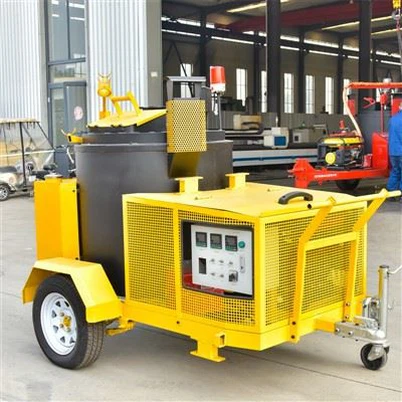
As a road joint filling supplier, we not only offer a variety of filling materials but also provide high - quality equipment to ensure proper application. Our 120L Asphalt Crack Sealing Machine is a reliable and efficient tool for filling cracks and joints in asphalt roadways. It has a large capacity, allowing for continuous operation without frequent refilling.
The Fully Automatic Seam Sealing Machine is designed for high - speed and precise joint filling. It can automatically control the flow of the filling material, ensuring uniform application. This machine is suitable for large - scale road maintenance projects.
Our FAGF500 Pavement Sealing Machine is a versatile piece of equipment that can handle different types of filling materials. It is easy to operate and can be adjusted to meet the specific requirements of different road joints.
Why Consider Alternatives
When it comes to choosing road joint filling materials, there are several reasons to consider alternatives to traditional options. Firstly, from a performance perspective, many alternative materials offer better durability, flexibility, and chemical resistance. This means that they can provide longer - lasting protection for road joints, reducing the need for frequent repairs and maintenance.
Secondly, in terms of cost - effectiveness, while some alternative materials may have a higher upfront cost, they can save money in the long run. For example, polymer - based sealants may require less frequent replacement compared to traditional asphalt - based sealants, resulting in lower overall maintenance costs.
Finally, from an environmental standpoint, alternatives such as bio - based sealants and geosynthetic materials are more sustainable. They help reduce the environmental impact of road construction and maintenance, which is in line with the growing global trend towards green infrastructure.
Contact Us for Procurement
If you are interested in exploring the alternatives to traditional road joint filling materials or are looking for high - quality road joint filling equipment, we are here to assist you. Our team of experts can provide you with detailed information about our products, including their features, benefits, and application methods. We can also offer customized solutions based on your specific project requirements. Whether you are a municipality, a contractor, or a road maintenance crew, we are committed to providing you with the best products and services. Get in touch with us to start a procurement discussion and take the first step towards better road joint filling solutions.
References
- "Sealants for Highway Joints and Cracks" - Transportation Research Board
- "Polymer - Based Sealants in Civil Engineering" - Journal of Construction and Building Materials
- "Geosynthetics in Road Construction" - Geosynthetics International Journal
- "Bio - Based Polymers for Sustainable Construction" - Green Materials Journal