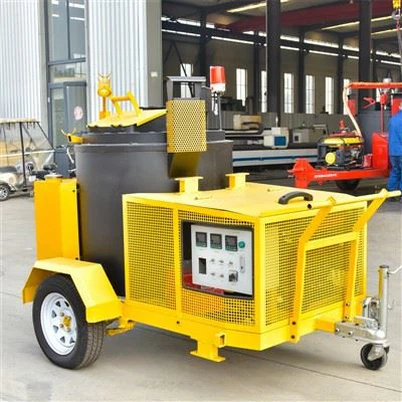
What is the working principle of a pneumatic joint filling machine?
Leave a message

Hey there! As a supplier of joint filling machines, I often get asked about how these nifty devices work. So, today, I'm gonna break down the working principle of a pneumatic joint filling machine for you.
What's a Pneumatic Joint Filling Machine?
First off, let's talk about what a pneumatic joint filling machine is. It's a piece of equipment used mainly in road construction and maintenance to fill joints in pavements, like those between concrete slabs. These joints are crucial as they prevent cracking due to temperature changes and traffic loads. Our machines are designed to efficiently and effectively fill these joints with materials like asphalt sealant.
The Basics of Pneumatics
Before we dive into the machine itself, let's understand pneumatics. Pneumatics is all about using compressed air to do work. In a pneumatic system, air is compressed and stored in a tank. This compressed air can then be used to power various components, like cylinders and valves. It's a reliable and cost - effective way to transfer energy, which is why it's widely used in many industrial applications, including our joint filling machines.


Components of a Pneumatic Joint Filling Machine
- Air Compressor: This is the heart of the pneumatic system. The air compressor takes in ambient air and compresses it to a high pressure. The compressed air is then stored in a tank for later use. A good air compressor is essential for the smooth operation of the joint filling machine. It needs to be able to produce enough compressed air to power all the pneumatic components.
- Material Tank: This is where the joint filling material, usually asphalt sealant, is stored. The tank is designed to keep the material at the right temperature and consistency. It's often equipped with heating elements to prevent the sealant from solidifying.
- Pneumatic Cylinders: These are used to move the components of the machine. For example, they can be used to control the flow of the sealant from the tank to the joint. When the compressed air is directed into the cylinder, it causes the piston inside to move, which in turn moves the connected parts.
- Valves: Valves play a crucial role in controlling the flow of compressed air and the joint filling material. There are different types of valves, such as solenoid valves and check valves. Solenoid valves are electrically controlled and can be used to start and stop the flow of air or material. Check valves, on the other hand, ensure that the flow is in one direction only.
- Nozzle: The nozzle is the part of the machine that actually dispenses the joint filling material into the joint. It's designed to ensure an even and smooth flow of the sealant. The size and shape of the nozzle can be adjusted depending on the width and depth of the joint.
How It All Works Together
Now that we know the components, let's see how they work together.
- Air Compression: The air compressor starts by taking in air from the surroundings. It compresses this air to a high pressure and stores it in the air tank. The pressure in the tank is monitored, and the compressor will automatically start and stop to maintain the right pressure.
- Material Preparation: While the air is being compressed, the joint filling material in the material tank is being heated to the right temperature. This ensures that the sealant is in a fluid state and can be easily pumped.
- Controlling the Flow: When it's time to start filling a joint, the operator activates the solenoid valves. These valves direct the compressed air to the pneumatic cylinders. The cylinders then move the components that control the flow of the sealant from the tank to the nozzle.
- Dispensing the Sealant: The compressed air also creates the pressure needed to push the sealant through the nozzle and into the joint. The operator can control the speed and amount of the sealant being dispensed by adjusting the valves. As the nozzle moves along the joint, it evenly fills the space with the sealant.
- Finishing Up: Once the joint is filled, the operator can stop the flow of the sealant by closing the valves. The machine can then be moved to the next joint, and the process repeats.
Our Product Line
We offer a range of joint filling machines to meet different needs. For example, the FAGF200 Asphalt Crack Sealing Machine is a great choice for smaller projects. It's compact and easy to operate, making it ideal for filling cracks in driveways or small parking lots.
If you're looking for something more portable, our Hand Pushed Seam asphalt sealing machine is a perfect option. You can easily push it around and fill joints in sidewalks or other areas where large machinery can't reach.
For larger road construction and maintenance projects, the FAGF500 Pavement Sealing Machine is a powerful and reliable choice. It has a larger material tank and can dispense the sealant at a faster rate.
Why Choose Our Pneumatic Joint Filling Machines
- Reliability: Our machines are built with high - quality components, ensuring long - term and trouble - free operation.
- Efficiency: The pneumatic system allows for quick and precise filling of joints, saving you time and labor costs.
- Versatility: With different models available, you can choose the machine that best suits your project requirements.
Contact Us for Purchase and Consultation
If you're in the market for a joint filling machine, we'd love to hear from you. Whether you have questions about the working principle, need help choosing the right model, or are ready to make a purchase, we're here to assist. Contact us today, and let's get your project on the right track.
References
- Industrial Pneumatics Handbook.
- Road Construction and Maintenance Equipment Manuals.
- Asphalt Sealant Application Guidelines.