What materials are used for road joint filling?
Leave a message

When it comes to road construction and maintenance, one crucial aspect that often gets overlooked is road joint filling. Proper joint filling is essential for preventing water infiltration, reducing the risk of pavement damage, and extending the lifespan of roads. As a leading road joint filling supplier, I've witnessed firsthand the importance of choosing the right materials for this task. In this blog post, I'll explore the various materials commonly used for road joint filling, their characteristics, and their applications.
Asphalt-Based Materials
Asphalt is one of the most widely used materials for road joint filling. It is a sticky, black, and highly viscous liquid or semi-solid form of petroleum. Asphalt-based joint fillers are popular due to their excellent adhesion, flexibility, and resistance to weathering. They can effectively seal joints and prevent water from penetrating the pavement structure.
Hot-Poured Asphalt
Hot-poured asphalt is a traditional joint filling material that has been used for decades. It is heated to a high temperature (usually between 300°F and 400°F) to reduce its viscosity and make it easier to pour into the joints. Once poured, it cools and hardens, forming a durable seal. Hot-poured asphalt is suitable for both horizontal and vertical joints in asphalt pavements. It provides good resistance to traffic loads and can withstand extreme temperature variations.
However, hot-poured asphalt has some limitations. It requires specialized equipment for heating and pouring, which can be expensive and time-consuming. Additionally, the installation process can be hazardous due to the high temperatures involved. Moreover, hot-poured asphalt may become brittle over time, especially in cold climates, which can lead to cracking and loss of seal integrity.
Cold-Applied Asphalt Emulsions
Cold-applied asphalt emulsions are a more convenient alternative to hot-poured asphalt. They are made by mixing asphalt with water and an emulsifying agent. The emulsifying agent helps to disperse the asphalt particles in the water, creating a stable emulsion that can be applied at ambient temperatures. Cold-applied asphalt emulsions are easy to use and can be applied using a variety of methods, such as brushing, spraying, or pouring.
Cold-applied asphalt emulsions offer several advantages over hot-poured asphalt. They are safer to handle since they do not require heating to high temperatures. They also have a faster curing time, which means that traffic can be restored to the road more quickly. Additionally, cold-applied asphalt emulsions are more environmentally friendly since they do not produce harmful fumes during application.
However, cold-applied asphalt emulsions may not provide the same level of durability as hot-poured asphalt. They are more susceptible to damage from traffic loads and may require more frequent maintenance. Moreover, the performance of cold-applied asphalt emulsions can be affected by factors such as temperature, humidity, and surface cleanliness.
Rubberized Asphalt
Rubberized asphalt is a modified form of asphalt that contains recycled rubber particles. The rubber particles are typically derived from scrap tires, which are shredded and processed into fine particles. Adding rubber to asphalt improves its flexibility, elasticity, and resistance to cracking. Rubberized asphalt is particularly suitable for areas with high traffic volumes and extreme temperature variations.
Hot-Poured Rubberized Asphalt
Hot-poured rubberized asphalt is similar to hot-poured asphalt, but it contains a higher percentage of rubber particles. The rubber particles enhance the durability and performance of the joint filler, making it more resistant to fatigue and deformation. Hot-poured rubberized asphalt is commonly used in highway construction and maintenance projects, where it provides excellent long-term performance.
Cold-Applied Rubberized Asphalt Sealants
Cold-applied rubberized asphalt sealants are a convenient alternative to hot-poured rubberized asphalt. They are typically formulated as a liquid or paste that can be applied at ambient temperatures. Cold-applied rubberized asphalt sealants offer good adhesion, flexibility, and resistance to weathering. They are suitable for a wide range of applications, including joint filling in asphalt and concrete pavements.
Silicone Sealants
Silicone sealants are another popular choice for road joint filling. They are made from silicone polymers, which are synthetic materials that offer excellent flexibility, durability, and resistance to weathering. Silicone sealants can withstand extreme temperature variations, from -40°F to 400°F, without losing their sealing properties. They are also resistant to UV radiation, ozone, and chemicals, making them suitable for use in harsh environments.


Silicone sealants are available in both single-component and two-component formulations. Single-component silicone sealants are easy to use and can be applied directly from the tube. They cure by reacting with moisture in the air, forming a flexible and durable seal. Two-component silicone sealants require mixing before application and offer faster curing times and higher strength.
Silicone sealants offer several advantages over other joint filling materials. They provide excellent adhesion to a variety of substrates, including asphalt, concrete, and metal. They are also highly elastic, which allows them to accommodate movement in the joints without cracking or losing their seal integrity. Moreover, silicone sealants have a long service life and require minimal maintenance.
However, silicone sealants are relatively expensive compared to other joint filling materials. They also require careful surface preparation to ensure proper adhesion. Additionally, silicone sealants may not be suitable for applications where high load-bearing capacity is required.
Polyurethane Sealants
Polyurethane sealants are a versatile and high-performance option for road joint filling. They are made from polyurethane polymers, which offer excellent adhesion, flexibility, and resistance to abrasion and chemicals. Polyurethane sealants can be formulated to have different properties, such as hardness, flexibility, and curing time, depending on the specific application requirements.
Polyurethane sealants are available in both single-component and two-component formulations. Single-component polyurethane sealants are easy to use and can be applied directly from the tube. They cure by reacting with moisture in the air, forming a flexible and durable seal. Two-component polyurethane sealants require mixing before application and offer faster curing times and higher strength.
Polyurethane sealants offer several advantages over other joint filling materials. They provide excellent adhesion to a variety of substrates, including asphalt, concrete, and metal. They are also highly elastic, which allows them to accommodate movement in the joints without cracking or losing their seal integrity. Moreover, polyurethane sealants have a long service life and can withstand heavy traffic loads.
However, polyurethane sealants are relatively expensive compared to other joint filling materials. They also require careful surface preparation to ensure proper adhesion. Additionally, polyurethane sealants may be sensitive to moisture during the curing process, which can affect their performance.
Choosing the Right Material
Choosing the right material for road joint filling depends on several factors, including the type of pavement, the location and severity of the joints, the traffic volume, and the environmental conditions. Here are some general guidelines to help you make an informed decision:
- Asphalt Pavements: For asphalt pavements, asphalt-based materials such as hot-poured asphalt, cold-applied asphalt emulsions, and rubberized asphalt are commonly used. These materials provide good adhesion and flexibility, and they are compatible with the asphalt pavement.
- Concrete Pavements: For concrete pavements, silicone sealants and polyurethane sealants are often preferred. These materials offer excellent adhesion to concrete and can withstand the movement and expansion of the concrete joints.
- High-Traffic Areas: In high-traffic areas, rubberized asphalt and polyurethane sealants are recommended. These materials offer high durability and resistance to traffic loads.
- Extreme Temperature Variations: In areas with extreme temperature variations, silicone sealants and rubberized asphalt are suitable. These materials can withstand a wide range of temperatures without losing their sealing properties.
- Environmental Considerations: When choosing a joint filling material, it is important to consider the environmental impact. Cold-applied materials are generally more environmentally friendly than hot-poured materials since they do not require heating to high temperatures. Additionally, materials made from recycled materials, such as rubberized asphalt, are a sustainable choice.
Our Products and Services
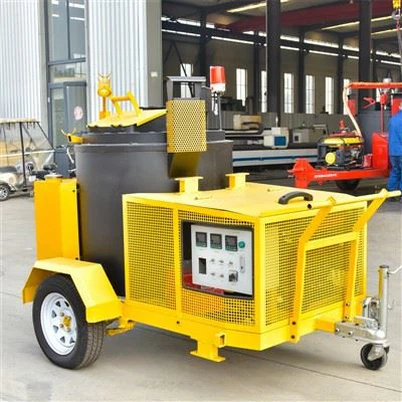
As a road joint filling supplier, we offer a wide range of high-quality joint filling materials and equipment to meet the needs of our customers. Our products include hot-poured asphalt, cold-applied asphalt emulsions, rubberized asphalt sealants, silicone sealants, and polyurethane sealants. We also provide a variety of equipment, such as Asphalt Crack Treatment Machine, 120L Asphalt Crack Sealing Machine, and FAGF200 Asphalt Crack Sealing Machine, to ensure efficient and effective installation.
Our team of experts is available to provide technical support and advice to help you choose the right material and equipment for your project. We also offer training and installation services to ensure that your joint filling project is completed to the highest standards.
Conclusion
Choosing the right material for road joint filling is essential for ensuring the long-term performance and durability of the pavement. Asphalt-based materials, rubberized asphalt, silicone sealants, and polyurethane sealants are all popular choices, each with its own advantages and limitations. By considering factors such as the type of pavement, traffic volume, environmental conditions, and budget, you can select the most suitable material for your project.
If you have any questions or need further information about road joint filling materials or equipment, please do not hesitate to contact us. We are committed to providing our customers with the highest quality products and services and look forward to working with you on your next road joint filling project.
References
- ASTM International. (2023). Standard Specification for Hot-Poured Joint Sealants for Concrete Pavements. ASTM D994.
- Federal Highway Administration. (2022). Pavement Preservation: Joint and Crack Sealing. FHWA-HRT-22-059.
- National Asphalt Pavement Association. (2021). Asphalt Pavement Maintenance Manual. NAPA Publication No. 100.