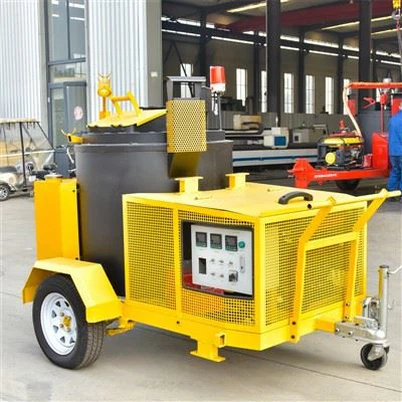
What is a microsurfacing road repair machine?
Leave a message

A microsurfacing road repair machine is a specialized piece of equipment designed for the application of microsurfacing, a preventive maintenance treatment for asphalt pavements. As a leading supplier of road repair machines, I am excited to delve into the details of this remarkable technology and its significance in the field of road maintenance.
What is Microsurfacing?
Microsurfacing is a cold - mix asphalt emulsion treatment that consists of polymer - modified asphalt emulsion, aggregate, mineral filler, water, and chemical additives. It is applied in a thin layer, typically ranging from 3 to 10 millimeters, on the surface of existing asphalt pavements. This treatment offers several benefits, including improved skid resistance, sealing of cracks, protection against water infiltration, and enhancement of the pavement's appearance.
How Does a Microsurfacing Road Repair Machine Work?
A microsurfacing road repair machine is essentially a mobile mixing and application unit. It is usually mounted on a truck chassis for easy mobility on the road network. The machine has several key components that work in harmony to ensure a successful microsurfacing application.
- Aggregate Bin: This is where the aggregate, which forms the bulk of the microsurfacing mixture, is stored. The aggregate is carefully selected based on its size, shape, and quality to meet the specific requirements of the project.
- Emulsion Tank: The polymer - modified asphalt emulsion is stored in a separate tank. The emulsion is a crucial component as it binds the aggregate and other materials together.
- Filler Hopper: Mineral fillers, such as limestone dust or cement, are stored in the filler hopper. These fillers help to improve the workability and performance of the microsurfacing mixture.
- Water Tank: Water is added to the mixture to adjust its consistency and facilitate the mixing process. The water tank is equipped with a metering system to ensure the correct amount of water is added.
- Mixing Chamber: This is where all the components - aggregate, emulsion, filler, and water - are combined and thoroughly mixed. The mixing chamber is designed to ensure a homogeneous mixture, which is essential for the quality of the microsurfacing application.
- Spreader Box: Once the mixture is ready, it is transferred to the spreader box, which distributes the microsurfacing mixture evenly across the road surface. The spreader box can be adjusted to control the width and thickness of the application.
Advantages of Using a Microsurfacing Road Repair Machine
- Cost - Effective: Microsurfacing is a relatively inexpensive road repair solution compared to other methods such as full - depth reconstruction. The use of a microsurfacing road repair machine allows for efficient application, reducing labor costs and minimizing traffic disruptions.
- Quick Installation: The application process is fast, and the treated road can be opened to traffic within a short period, usually within 1 - 2 hours. This is particularly beneficial for busy roads where minimizing traffic downtime is crucial.
- Improved Pavement Performance: Microsurfacing enhances the skid resistance, smoothness, and durability of the road surface. It also seals cracks and prevents water from penetrating the pavement, thereby extending the service life of the road.
- Environmentally Friendly: Microsurfacing is a cold - mix process, which means it requires less energy compared to hot - mix asphalt applications. Additionally, it can use recycled materials, further reducing its environmental impact.
Applications of Microsurfacing Road Repair Machines
- Highways and Expressways: These roads are subject to heavy traffic and require regular maintenance to ensure safety and performance. Microsurfacing can be used to improve the surface condition of highways and expressways, reducing the risk of accidents and extending the pavement's lifespan.
- Urban Roads: In urban areas, traffic congestion is a major issue. The quick installation time of microsurfacing makes it an ideal solution for urban road repair, minimizing disruptions to traffic and local businesses.
- Airport Runways: Airport runways need to have excellent skid resistance and smoothness. Microsurfacing can be used to maintain the surface quality of runways, ensuring safe take - offs and landings.
Our Road Repair Machine Product Line
As a supplier of road repair machines, we offer a wide range of microsurfacing road repair machines to meet the diverse needs of our customers. Our machines are designed with the latest technology and high - quality components to ensure reliable performance and long - term durability.
In addition to microsurfacing road repair machines, we also provide other related equipment such as Road Clearing Vehicle, Road Repair Vehicle, and Road Maintenance Truck. These vehicles are essential for comprehensive road maintenance operations.
Why Choose Our Road Repair Machines?
- Quality Assurance: We adhere to strict quality control standards in the manufacturing process. Our machines are thoroughly tested before leaving the factory to ensure they meet the highest quality and performance requirements.
- Customization Options: We understand that different projects have different requirements. Therefore, we offer customization options for our road repair machines, allowing customers to choose the features and specifications that best suit their needs.
- After - Sales Service: Our dedicated after - sales service team is available to provide technical support, maintenance, and spare parts supply. We are committed to ensuring that our customers' machines operate smoothly throughout their lifespan.
Contact Us for Procurement and Negotiation
If you are interested in our microsurfacing road repair machines or other road maintenance equipment, we invite you to contact us for procurement and negotiation. Our experienced sales team will be happy to provide you with detailed product information, pricing, and delivery options. We look forward to working with you to meet your road maintenance needs.


References
- American Society for Testing and Materials (ASTM). Standard Specifications for Microsurfacing.
- National Asphalt Pavement Association (NAPA). Microsurfacing: A Guide for Design, Construction, and Quality Control.
- Transportation Research Board (TRB). Research on Microsurfacing Technologies and Applications.