What are the reasons for uneven road joint filling?
Leave a message

Hey there! I'm a supplier in the road joint filling business, and I've seen my fair share of uneven road joint filling. It's a common issue that can cause a lot of headaches, not just for us suppliers but also for those in charge of road maintenance and construction. So, let's dig into the reasons behind this problem.
1. Poor Surface Preparation
One of the biggest culprits for uneven road joint filling is poor surface preparation. Before we start filling those joints, the surface needs to be clean and dry. If there's dirt, debris, or moisture in the joints, it can prevent the filler from adhering properly.
For example, if there are loose rocks or sand in the joint, the filler won't be able to bond with the road surface. This can lead to gaps and unevenness once the filler dries. And moisture is another big no - no. Water can react with the filler material, changing its properties and causing it to shrink or expand unevenly.
To ensure proper surface preparation, we usually use tools like blowers to remove loose debris and dry the joints. Sometimes, we also use a wire brush to scrub the sides of the joints to get rid of any stubborn dirt. It's a time - consuming process, but it's essential for a smooth and even joint filling.
2. Incorrect Filler Material Selection
Choosing the right filler material is crucial for even road joint filling. There are different types of filler materials available, such as asphalt - based, rubber - based, and cement - based. Each material has its own properties, and using the wrong one for a particular application can lead to uneven results.
Asphalt - based fillers are commonly used because they are flexible and can withstand temperature changes. However, if the road experiences a lot of heavy traffic, an asphalt - based filler might not be strong enough, and it could wear down unevenly. On the other hand, cement - based fillers are very rigid and are better suited for areas with less movement. Using a cement - based filler in a joint that experiences a lot of expansion and contraction due to temperature changes can cause cracking and unevenness.
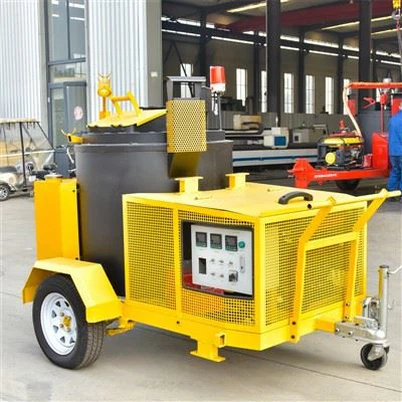
As a supplier, we always recommend that our customers consider factors like traffic volume, temperature range, and the type of road surface before choosing a filler material. We also offer advice on which of our Asphalt Crack Sealing Machine or other equipment is best suited for the chosen filler material.
3. Improper Application Techniques
How we apply the filler material also plays a significant role in the evenness of the joint filling. If the filler is not applied at the right temperature, it can have issues with flow and adhesion. For example, if an asphalt - based filler is too cold when applied, it won't spread evenly and might form lumps.
Another common mistake is applying the filler too quickly or too slowly. If we apply it too quickly, the filler might not have enough time to settle properly in the joint, leading to voids and unevenness. And if we apply it too slowly, the filler might start to cool and harden before it's fully in place.
To avoid these problems, we use specialized equipment like the Fully Automatic Seam Sealing Machine. This machine helps us control the flow rate and temperature of the filler material, ensuring a more even application.
4. Equipment Malfunctions
The equipment we use for road joint filling can sometimes malfunction, which can result in uneven filling. For instance, if the pump on a grouting machine is not working correctly, it might not be able to deliver the filler material at a consistent rate. This can cause some parts of the joint to have more filler than others.
Also, if the nozzle of the application equipment is clogged or damaged, it can affect the way the filler is distributed. A clogged nozzle might spray the filler in an uneven pattern, leading to an inconsistent joint filling.
Regular maintenance of our equipment is essential to prevent these issues. We always make sure to check and service our 500L Hydraulic Traction Grouting Machine and other tools before each use.
5. Environmental Factors
Environmental factors can also contribute to uneven road joint filling. Extreme temperatures can affect the properties of the filler material. In very hot weather, the filler might become too soft and flow out of the joint, leaving it under - filled. In cold weather, the filler might become too hard and brittle, making it difficult to apply evenly.
Humidity is another factor. High humidity can slow down the drying process of the filler, and it might also cause the filler to absorb moisture, which can lead to uneven curing. Wind can also be a problem, as it can blow the filler around and cause an uneven distribution.
To deal with environmental factors, we try to schedule our joint filling work during the most suitable weather conditions. If we have to work in less - than - ideal conditions, we use techniques and materials that are more resistant to these factors.
6. Human Error
Let's face it, humans make mistakes. Even with the best equipment and materials, a simple error by the operator can lead to uneven road joint filling. For example, an operator might not pay close attention to the level of the filler in the joint, resulting in some areas being over - filled and others under - filled.
Training is essential to minimize human error. We provide comprehensive training to our operators on how to use the equipment properly, how to select the right filler material, and how to deal with different situations. We also encourage our operators to double - check their work as they go along to catch any potential mistakes early.
In conclusion, there are several reasons for uneven road joint filling, including poor surface preparation, incorrect filler material selection, improper application techniques, equipment malfunctions, environmental factors, and human error. As a road joint filling supplier, we're constantly working to address these issues to provide our customers with the best possible results.


If you're in the market for road joint filling materials or equipment, or if you have any questions about how to avoid uneven joint filling, don't hesitate to reach out. We're here to help you with all your road joint filling needs.
References
- "Road Maintenance and Rehabilitation Handbook"
- Industry reports on road construction materials and techniques