What are the limitations of some China road joint filling materials?
Leave a message

Hey there! I'm a supplier of China road joint filling materials. Over the years, I've seen firsthand the ins and outs of these products. Today, I wanna talk about the limitations of some China road joint filling materials.
1. Temperature Sensitivity
One of the big issues with a lot of China road joint filling materials is their sensitivity to temperature. In high - temperature areas, materials like some asphalt - based joint fillers can become too soft. When it's scorching hot outside, the filler starts to ooze out of the joints. This not only makes the road surface look messy but also reduces the effectiveness of the joint filling. The filler that oozes out can get stuck to vehicle tires, and then be spread around on the road, causing skid hazards.
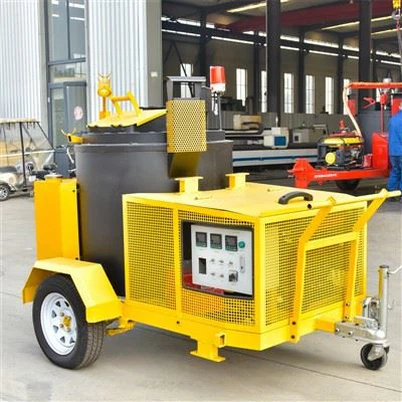
On the flip side, in cold - temperature regions, these materials can become brittle. When the temperature drops significantly, the joint filler may crack or break. This is a major problem because once the filler is damaged, water can seep into the joints. Water penetration can lead to all sorts of problems, like the expansion and contraction of the road base during freeze - thaw cycles, which ultimately causes more cracks and damage to the road surface. If you're looking for equipment to deal with these issues, check out the Asphalt Crack sealing Machine. It can help in filling and maintaining the joints properly in different temperature conditions.
2. Durability
Durability is another limitation. Some of the road joint filling materials in China have a relatively short service life. They may start to degrade after just a few years of use. This degradation can be due to a variety of factors, such as exposure to sunlight, traffic loads, and chemical substances on the road.
For example, in areas with heavy traffic, the constant pressure from vehicles can wear down the joint filling material. The filler may start to lose its adhesion to the road surface, and small pieces can break off. In addition, exposure to chemicals like oil and gasoline from vehicles can also cause the filler to deteriorate. When the durability is low, it means more frequent maintenance and replacement of the joint filling materials, which can be costly and time - consuming for road maintenance departments. You might want to consider using a Road Mend Machine to help with quick repairs and extend the life of the joint filling.
3. Compatibility
Compatibility is often overlooked but is a crucial limitation. Some road joint filling materials may not be compatible with the type of road surface they are applied to. For instance, if you use a filler designed for asphalt roads on a cement concrete road, it may not adhere properly. The different expansion and contraction rates of asphalt and cement concrete can cause the filler to fail prematurely.
The chemical composition of the road surface and the filler also needs to be considered. If they are not chemically compatible, it can lead to a weak bond between the filler and the road, and the filler may peel off or crack easily. Before choosing a joint filling material, it's essential to understand the characteristics of the road surface and select a compatible filler. And if you need equipment for filling different types of road surfaces, the Asphalt Crack Sealing Machine can be a useful tool.
4. Installation Complexity
Some China road joint filling materials require complex installation processes. For example, some fillers need to be heated to a specific temperature before application. This requires specialized equipment and trained personnel. If the heating temperature is not controlled accurately, the performance of the filler can be affected.
In addition, the joint preparation before filling is also critical. The joints need to be cleaned thoroughly to ensure good adhesion of the filler. Any dirt, debris, or moisture in the joints can prevent the filler from bonding properly. This complex installation process can increase the cost and time of road joint filling projects. And if you don't have the right equipment, it can be even more challenging. That's where equipment like the ones I've mentioned earlier come in handy.
5. Environmental Impact
There are also environmental concerns associated with some road joint filling materials. Some traditional fillers contain harmful chemicals that can be released into the environment during production, installation, or use. For example, some asphalt - based fillers may release volatile organic compounds (VOCs) when heated. These VOCs can contribute to air pollution and have a negative impact on human health.
In addition, the disposal of used or damaged joint filling materials can also be a problem. If not disposed of properly, they can contaminate soil and water. As more and more attention is being paid to environmental protection, the use of these environmentally - unfriendly materials is becoming less and less acceptable.
Overcoming the Limitations
Despite these limitations, there are ways to overcome them. Manufacturers are constantly researching and developing new materials that are more temperature - resistant, durable, and environmentally friendly. For example, there are new polymer - based joint fillers that have better performance in different temperature conditions and are more durable.
In addition, proper selection of materials and equipment, as well as correct installation and maintenance, can also help to minimize the impact of these limitations. When choosing a road joint filling material, it's important to consider the specific conditions of the road, such as traffic volume, temperature range, and road surface type. And using high - quality equipment like the ones I've linked to can make the filling process more efficient and effective.
Why Choose Us
As a China road joint filling material supplier, we understand these limitations very well. We work hard to source and provide materials that can address these issues. Our products are carefully selected to ensure good performance in different environments. We also offer technical support to help our customers with the installation and maintenance of the joint filling materials.


If you're in the market for road joint filling materials or related equipment, don't hesitate to get in touch with us. We can have a detailed discussion about your specific needs and provide you with the best solutions. Whether it's dealing with temperature - sensitive roads, high - traffic areas, or environmental concerns, we've got you covered. So, if you're looking to improve the quality of your road joint filling projects, give us a chance to help you out.
References
- "Road Engineering Handbook": This handbook provides comprehensive information on road construction and maintenance, including details about road joint filling materials and their limitations.
- "Journal of Transportation Engineering": Articles in this journal often discuss the latest research and developments in road engineering, including the performance and limitations of different road joint filling materials.