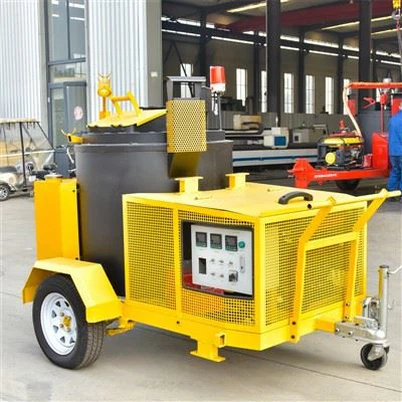
What are the dimensions of a typical road repair vehicle?
Leave a message

When it comes to road repair and maintenance, the dimensions of a typical road repair vehicle play a crucial role in determining its functionality, maneuverability, and effectiveness. As a leading supplier of road repair vehicles, I understand the importance of these dimensions and how they can impact the overall performance of the vehicle. In this blog post, I will delve into the various dimensions of a typical road repair vehicle, explaining their significance and how they contribute to the success of road repair operations.
Overall Length
The overall length of a road repair vehicle is an important dimension that affects its maneuverability on the road. A longer vehicle may be more suitable for carrying larger equipment and materials, but it can also be more difficult to navigate through tight spaces and congested areas. On the other hand, a shorter vehicle may be more agile and easier to maneuver, but it may have limited capacity for carrying equipment and materials.
Typically, the overall length of a road repair vehicle ranges from 5 to 15 meters, depending on the type and size of the vehicle. For example, a small Road Surface Maintenance Vehicle may have an overall length of around 5 to 7 meters, while a larger Road Comprehensive Maintenance Vehicle can have an overall length of up to 15 meters.
Width
The width of a road repair vehicle is another important dimension that impacts its ability to operate on different types of roads. A wider vehicle may provide more stability and space for equipment and materials, but it can also be more challenging to drive on narrow roads or in areas with limited clearance. Conversely, a narrower vehicle may be more suitable for navigating through tight spaces, but it may have less room for equipment and materials.


The width of a typical road repair vehicle usually ranges from 2 to 3 meters. This width allows the vehicle to comfortably operate on most roads while still providing enough space for essential equipment and materials. However, in some cases, specialized road repair vehicles may have a wider or narrower width depending on their specific requirements.
Height
The height of a road repair vehicle is a critical dimension that affects its clearance under bridges, overpasses, and other structures. A taller vehicle may be required to accommodate certain types of equipment or to provide a better view for the operator, but it may also be restricted in areas with low clearance. On the other hand, a shorter vehicle may have better clearance but may have limited space for equipment and materials.
The height of a road repair vehicle typically ranges from 2.5 to 4 meters. This height range allows the vehicle to pass under most standard bridges and overpasses while still providing enough space for essential equipment and materials. However, in some cases, specialized road repair vehicles may have a taller or shorter height depending on their specific design and function.
Wheelbase
The wheelbase of a road repair vehicle refers to the distance between the front and rear axles. A longer wheelbase can provide more stability and a smoother ride, especially when carrying heavy loads. It also allows for better weight distribution, which can improve the vehicle's handling and braking performance. However, a longer wheelbase may also make the vehicle less maneuverable in tight spaces.
Conversely, a shorter wheelbase can make the vehicle more agile and easier to turn, but it may sacrifice some stability and load-carrying capacity. The wheelbase of a typical road repair vehicle can vary depending on its size and design, but it generally ranges from 3 to 6 meters.
Ground Clearance
Ground clearance is the distance between the lowest point of the vehicle's undercarriage and the ground. Adequate ground clearance is essential for road repair vehicles, especially when operating on rough or uneven terrain. A higher ground clearance allows the vehicle to clear obstacles such as rocks, potholes, and debris without damaging the undercarriage.
The ground clearance of a road repair vehicle typically ranges from 20 to 40 centimeters. This level of ground clearance provides sufficient protection for the vehicle's undercarriage while still maintaining good stability and handling on the road. However, in some cases, specialized road repair vehicles may have a higher or lower ground clearance depending on their specific requirements.
Loading Capacity
The loading capacity of a road repair vehicle is an important dimension that determines how much equipment and materials it can carry. This capacity is usually measured in terms of weight and volume. A higher loading capacity allows the vehicle to transport more materials and equipment in a single trip, reducing the number of trips required for road repair operations and increasing efficiency.
The loading capacity of a typical road repair vehicle can vary widely depending on its size and design. Smaller vehicles may have a loading capacity of a few hundred kilograms, while larger vehicles can carry several tons of equipment and materials. When choosing a road repair vehicle, it is important to consider the specific loading requirements of your road repair projects to ensure that the vehicle can meet your needs.
Impact of Dimensions on Road Repair Operations
The dimensions of a road repair vehicle have a significant impact on its performance and effectiveness in road repair operations. For example, a vehicle with the appropriate length, width, and height can easily navigate through different types of roads and access repair sites. A longer and wider vehicle may be more suitable for carrying larger equipment and materials, which can reduce the number of trips required for a project.
On the other hand, a more compact vehicle with a shorter wheelbase and better maneuverability may be preferred for working in urban areas or on narrow roads. Additionally, the loading capacity and ground clearance of the vehicle can affect its ability to carry and transport the necessary equipment and materials, as well as its performance on rough terrain.
Choosing the Right Road Repair Vehicle Based on Dimensions
As a road repair vehicle supplier, I understand that choosing the right vehicle for your specific needs is crucial. When selecting a road repair vehicle, it is important to consider the dimensions of the vehicle in relation to the type of road repair projects you will be undertaking.
For example, if you will be working primarily on urban roads with limited space, a more compact vehicle with a shorter length, width, and wheelbase may be more suitable. On the other hand, if you will be working on larger projects that require transporting heavy equipment and materials over long distances, a larger vehicle with a higher loading capacity and longer wheelbase may be a better choice.
In addition to considering the dimensions of the vehicle, it is also important to evaluate other factors such as the vehicle's performance, reliability, and cost. By carefully considering all of these factors, you can choose a road repair vehicle that will meet your specific needs and provide the best value for your investment.
Conclusion
In conclusion, the dimensions of a typical road repair vehicle are critical factors that determine its functionality, maneuverability, and effectiveness in road repair operations. From the overall length and width to the wheelbase and ground clearance, each dimension plays a crucial role in the vehicle's performance. As a leading supplier of road repair vehicles, we offer a wide range of vehicles with different dimensions to meet the diverse needs of our customers.
If you are in the market for a road repair vehicle and would like to discuss your specific requirements, please feel free to contact us. Our team of experts is ready to assist you in choosing the right vehicle for your road repair projects. We look forward to the opportunity to work with you and help you achieve your road repair goals.
References
- "Vehicle Design and Engineering Handbook." Various Authors.
- "Road Maintenance and Repair Best Practices." Industry Publications.