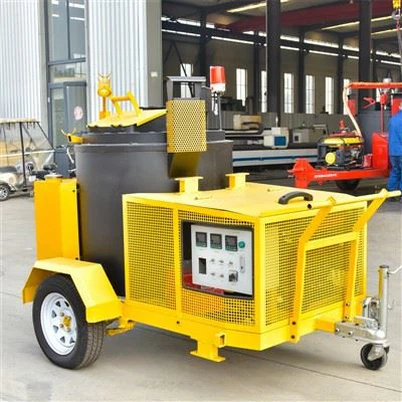
How does a road repair machine resist corrosion in coastal areas?
Leave a message

Hey there! I'm a supplier of Road Repair Machines, and today I wanna chat about how these machines resist corrosion in coastal areas. Coastal regions are beautiful, but they can be tough on machinery. The salty air, high humidity, and occasional sea spray create a harsh environment that can quickly wear down metal parts. So, how do our Road Repair Machines stand up to these challenges? Let's dive in.
Understanding the Corrosion Threat
First off, we need to understand what causes corrosion in coastal areas. The main culprit is salt. When salt in the air or sea spray comes into contact with metal, it starts a chemical reaction. Saltwater is a good conductor of electricity, which speeds up the process of oxidation. Oxidation is what we commonly call rust, and it can weaken the structure of the machine, leading to breakdowns and costly repairs.
Another factor is humidity. High levels of moisture in the air keep the metal surfaces wet for longer periods. This moisture acts as a medium for the chemical reactions that cause corrosion. Even on days when it's not raining, the damp air can still cause problems.
Our Anti - Corrosion Strategies
Material Selection
One of the first steps in making our Road Repair Machines corrosion - resistant is choosing the right materials. We use high - grade stainless steel for many of the critical components. Stainless steel contains chromium, which forms a thin, protective layer on the surface of the metal. This layer, called a passive film, prevents oxygen and water from reaching the underlying metal, thus slowing down the corrosion process.
For parts where stainless steel might be too expensive or not suitable, we use galvanized steel. Galvanizing involves coating the steel with a layer of zinc. Zinc is more reactive than steel, so when it's exposed to the elements, it corrodes first, sacrificing itself to protect the steel beneath. This sacrificial protection is a great way to extend the lifespan of the machine in a coastal environment.
Protective Coatings
In addition to using corrosion - resistant materials, we apply special protective coatings to the machines. These coatings act as a barrier between the metal and the corrosive environment. We use epoxy coatings, which are known for their excellent adhesion and resistance to chemicals and moisture. Epoxy coatings can be applied in multiple layers, providing a thick and durable shield.
We also use polyurethane coatings, which are flexible and can withstand mechanical stress. They are resistant to abrasion, which is important since our Road Repair Machines are often in contact with rough road surfaces. These coatings not only protect the metal from corrosion but also help to keep the machine looking good.
Design Considerations
The design of our Road Repair Machines also plays a crucial role in corrosion resistance. We make sure that there are no areas where water can collect. For example, we design the machine's body with slopes and drains so that rainwater and sea spray can quickly run off. This reduces the amount of time the metal is exposed to moisture.
We also avoid creating crevices and joints where salt and water can get trapped. Tight - fitting seals are used to prevent water from seeping into the internal components of the machine. By eliminating these potential corrosion hotspots, we can significantly improve the machine's durability in coastal areas.
Maintenance and Inspection
Even with all these anti - corrosion measures in place, regular maintenance and inspection are essential. We recommend that our customers in coastal areas clean their Road Repair Machines more frequently. A simple rinse with fresh water can remove salt and dirt from the surface of the machine, reducing the risk of corrosion.


Inspection is also key. We suggest that operators check the machines regularly for signs of corrosion, such as rust spots or peeling paint. If any issues are detected early, they can be addressed before they become major problems. We provide detailed maintenance manuals to our customers, and we also offer training on how to properly care for the machines.
Benefits of Our Corrosion - Resistant Road Repair Machines
The corrosion - resistant features of our Road Repair Machines offer several benefits. First and foremost, they have a longer lifespan. This means that our customers don't have to replace their machines as often, saving them money in the long run.
Secondly, our machines require less maintenance. With less corrosion, there are fewer breakdowns and repairs, which means less downtime. This is crucial for road maintenance crews, as any delay in repairing roads can cause inconvenience to the public.
Finally, our corrosion - resistant machines are more reliable. They can operate effectively in the harsh coastal environment, ensuring that roads are repaired quickly and efficiently. This helps to keep the transportation infrastructure in good condition, which is essential for the economic development of coastal regions.
Related Products
If you're also interested in other road maintenance vehicles, we have a great Road Cleaning Vehicle that can keep the roads clean. And for those looking into Asphalt hot recycling for road maintenance, we have solutions that can help you save costs and be more environmentally friendly. Of course, our Road Repair Machine is designed to meet all your road repair needs in coastal areas and beyond.
Conclusion
In conclusion, corrosion is a significant challenge for Road Repair Machines in coastal areas. But with the right combination of material selection, protective coatings, design considerations, and maintenance, our machines can resist the harsh coastal environment. If you're in the market for a reliable and corrosion - resistant Road Repair Machine, we'd love to talk to you. Whether you're a local government agency responsible for road maintenance or a private contractor, our machines can meet your needs. Get in touch with us to discuss your requirements and let's find the perfect solution for your road repair projects.
References
- Jones, D. A. (1992). Principles and Prevention of Corrosion. Macmillan Publishing Company.
- Uhlig, H. H., & Revie, R. W. (1985). Corrosion and Corrosion Control: An Introduction to Corrosion Science and Engineering. John Wiley & Sons.