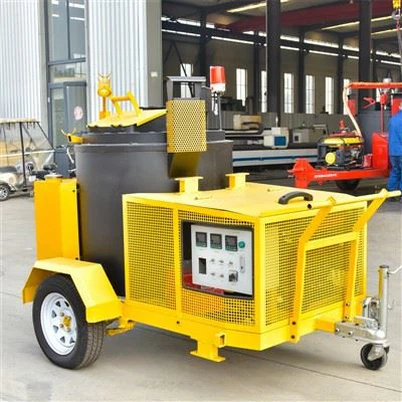
How does a road crack filling machine ensure a good seal?
Leave a message

Well, folks! As a supplier of road repair machines, I often get asked how a road crack filling machine ensures a good seal. It's a crucial question because a proper seal can significantly extend the lifespan of roads and save a ton of money in the long run. So, let's dive into the nitty - gritty of how these machines work their magic.
First off, let's talk about the importance of a good seal. Cracks in roads are like open wounds. If left untreated, water, debris, and chemicals can seep into them, causing further damage. This can lead to potholes, uneven surfaces, and ultimately, a shorter lifespan for the road. A road crack filling machine is designed to fill these cracks with a suitable sealing material, creating a barrier that prevents these harmful elements from getting in.
1. Preparation is Key
Before the actual filling process begins, the road crack filling machine starts with a thorough cleaning of the cracks. Most modern machines are equipped with high - pressure air blowers or vacuum systems. The high - pressure air blows out loose debris, dirt, and dust from the cracks. This step is super important because if there's any dirt left in the crack, it can prevent the sealing material from bonding properly.


For example, imagine trying to glue two pieces of wood together with sawdust in between. The glue won't stick well, right? The same goes for road crack sealing. Once the debris is removed, some machines can also use a heating element to dry the crack. Moisture can also interfere with the bonding process of the sealant, so getting rid of it is essential.
2. Selecting the Right Sealant
Not all sealants are created equal, and the road crack filling machine needs to work with the appropriate one for the job. There are different types of sealants, such as asphalt - based, rubberized, and polymer - modified sealants.
Asphalt - based sealants are cost - effective and are suitable for most general road crack sealing jobs. They have good adhesion properties and can withstand normal traffic loads. Rubberized sealants, on the other hand, are more flexible. They can expand and contract with the changing temperatures, which is great for areas with extreme weather conditions. Polymer - modified sealants offer a combination of strength, flexibility, and durability, making them ideal for high - traffic roads.
Our machines are designed to handle different types of sealants. They can heat the sealant to the right temperature, usually between 350°F - 400°F (177°C - 204°C), to make it fluid enough for easy application. This temperature control is crucial because if the sealant is too cold, it won't flow properly into the crack, and if it's too hot, it can lose its effectiveness.
3. Precise Application
The road crack filling machine is all about precision. It has a specialized nozzle that is designed to fit into the crack. The operator can control the flow rate of the sealant through a control panel on the machine. This allows for a consistent and even application of the sealant into the crack.
Some machines also have adjustable nozzles that can be used to change the width of the application according to the size of the crack. For narrow cracks, a smaller nozzle can be used to ensure that the sealant goes right into the crack without spilling over. For wider cracks, a larger nozzle can cover more area in one pass.
During the application process, the machine moves along the crack at a steady speed. This ensures that the sealant is evenly distributed and that there are no gaps or air pockets in the seal. If there are air pockets, it can lead to a weaker seal, which may fail under traffic or weather conditions.
4. Compaction and Finishing
After the sealant is applied, some machines can perform a compaction process. Compaction helps to ensure that the sealant fully fills the crack and bonds well with the road surface. This can be done using a roller or a vibrating device attached to the machine.
The compaction process also smooths out the surface of the sealant, making it more aesthetically pleasing and reducing the risk of tripping hazards. Once the compaction is done, the sealant is left to cool and harden. The cooling time depends on the type of sealant used, but it usually takes a few hours.
5. Quality Control
Throughout the entire process, quality control is essential. Our road crack filling machines are equipped with sensors and monitoring systems. These systems can detect issues such as temperature variations, flow rate problems, and sealant levels.
For example, if the temperature of the sealant drops below the optimal range, the machine can automatically adjust the heating element to bring it back up. This ensures that the quality of the seal remains high. Additionally, we provide training to our customers on how to use the machines effectively and how to conduct their own quality checks.
Related Road Maintenance Equipment
If you're interested in road maintenance, you might also want to check out some of our other products. We have the Greening Comprehensive Maintenance Vehicle, which is great for maintaining the green areas along the roads. It can handle tasks like watering plants, trimming bushes, and more.
The Pedestrian Cleaning Vehicle is another useful piece of equipment. It's designed to clean pedestrian areas, sidewalks, and bike lanes, keeping them safe and clean for the public.
And if you're dealing with larger - scale road maintenance, our Asphalt hot recycling for road maintenance system can help you recycle old asphalt, reducing costs and environmental impact.
Contact Us for More
If you're in the market for a road crack filling machine or any of our other road repair equipment, we'd love to hear from you. Our machines are known for their reliability, efficiency, and high - quality performance. We can provide you with all the information you need, including product specifications, pricing, and after - sales support. Whether you're a small - scale contractor or a large - scale road maintenance company, we have the right solution for you. Reach out to us for a consultation and let's find the best road repair equipment for your needs.
References
- "Pavement Preservation: Crack Sealing and Filling" by FHWA (Federal Highway Administration)
- "The Science of Road Maintenance" by International Association of Road Maintenance Professionals