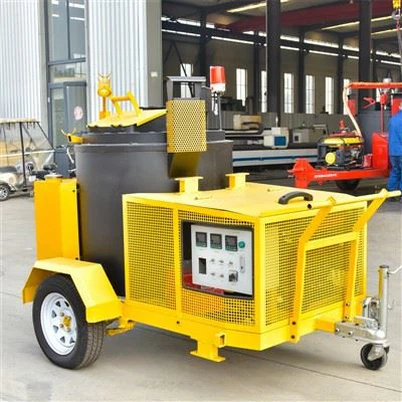
How does a road clearing vehicle clear metal scraps on the road?
Leave a message

As a supplier of road clearing vehicles, I've witnessed firsthand the crucial role these machines play in maintaining safe and clean roadways. One of the common challenges on roads is the presence of metal scraps, which can pose significant hazards to vehicles and pedestrians alike. In this blog post, I'll delve into the process of how a road clearing vehicle clears metal scraps on the road, exploring the technology, equipment, and techniques involved.
Understanding the Problem of Metal Scraps on Roads
Metal scraps on roads can originate from various sources, such as industrial activities, vehicle accidents, or construction sites. These scraps can range from small nails and screws to larger pieces of metal debris, like broken parts from vehicles or machinery. Regardless of their size, metal scraps can cause serious damage to tires, puncture them, and even lead to accidents if not promptly removed.
The Role of Road Clearing Vehicles
Road clearing vehicles are specifically designed to address a wide range of road maintenance issues, including the removal of metal scraps. These vehicles are equipped with specialized tools and technologies that enable them to efficiently locate, collect, and dispose of metal debris.
Technologies and Equipment Used
Magnetic Sweepers
One of the most effective tools for clearing metal scraps is the magnetic sweeper. This device uses powerful magnets to attract and collect metal objects from the road surface. Magnetic sweepers come in various sizes and configurations, depending on the specific requirements of the road clearing vehicle. Some magnetic sweepers are mounted directly on the front or rear of the vehicle, while others can be towed behind it.
The magnets used in magnetic sweepers are typically made of rare-earth materials, such as neodymium, which have extremely strong magnetic fields. These magnets can attract metal objects from a distance, allowing the sweeper to collect a large amount of metal scraps in a single pass. Once the metal objects are attracted to the magnets, they are held in place until the sweeper is emptied.
Metal Detectors
In addition to magnetic sweepers, road clearing vehicles may also be equipped with metal detectors. Metal detectors use electromagnetic fields to detect the presence of metal objects underground or on the road surface. These detectors can be used to locate hidden metal scraps that may not be visible to the naked eye.
When a metal detector detects the presence of a metal object, it sends a signal to the operator of the road clearing vehicle. The operator can then use a magnetic sweeper or other collection tool to retrieve the metal scrap. Metal detectors are particularly useful in areas where there is a high likelihood of metal debris, such as near industrial sites or construction areas.
Vacuum Systems
Some road clearing vehicles are equipped with vacuum systems that can be used to collect metal scraps and other debris from the road surface. Vacuum systems work by creating a powerful suction force that pulls debris into a collection container. These systems are particularly effective for collecting small metal objects, such as nails and screws, that may be difficult to pick up with a magnetic sweeper.
Vacuum systems can be either self-contained or connected to a larger collection unit on the road clearing vehicle. Self-contained vacuum systems are typically smaller and more portable, making them ideal for use in areas where access is limited. Connected vacuum systems, on the other hand, can handle larger volumes of debris and are often used in conjunction with other collection tools, such as magnetic sweepers.
The Clearing Process
Pre-Operation Inspection
Before starting the clearing process, the operator of the road clearing vehicle will conduct a pre-operation inspection to ensure that all equipment is in working order. This includes checking the magnetic sweeper, metal detector, vacuum system, and other collection tools. The operator will also inspect the vehicle itself to ensure that it is safe to operate.
Scanning the Road
Once the pre-operation inspection is complete, the road clearing vehicle will begin scanning the road for metal scraps. The operator will use the metal detector to locate any hidden metal objects, while the magnetic sweeper or vacuum system will be used to collect visible metal debris. The vehicle will typically travel at a slow speed to ensure that all metal scraps are detected and collected.
Collecting the Metal Scraps
As the road clearing vehicle moves along the road, the magnetic sweeper or vacuum system will collect the metal scraps. The metal objects will be held in place by the magnets or suction force until the sweeper or vacuum system is emptied. The operator will periodically stop the vehicle to empty the collection container and dispose of the metal scraps.
Disposal of the Metal Scraps
Once the metal scraps have been collected, they will be transported to a designated disposal site. The disposal site may be a recycling facility, where the metal scraps can be processed and reused, or a landfill, where they will be buried. The operator of the road clearing vehicle will ensure that the metal scraps are disposed of in accordance with local environmental regulations.
Our Road Clearing Vehicle Solutions
At our company, we offer a wide range of road clearing vehicles that are specifically designed to meet the needs of different customers. Our vehicles are equipped with the latest technologies and equipment, including magnetic sweepers, metal detectors, and vacuum systems, to ensure efficient and effective clearing of metal scraps and other debris from the road surface.
One of our popular products is the Electric Four-wheel Road Maintenance Vehicle. This vehicle is powered by electricity, making it environmentally friendly and cost-effective to operate. It is equipped with a magnetic sweeper and a vacuum system, allowing it to collect both large and small metal objects from the road surface.
Another product in our lineup is the Asphalt Curing Vehicle 800L. While this vehicle is primarily used for asphalt curing, it can also be equipped with a magnetic sweeper or other collection tools to clear metal scraps from the road. The 800L capacity of the asphalt tank ensures that the vehicle can cover a large area without the need for frequent refilling.
We also offer the Rural Road Maintenance Vehicle, which is designed for use in rural areas. This vehicle is compact and maneuverable, making it ideal for clearing metal scraps and other debris from narrow roads and pathways. It is equipped with a magnetic sweeper and a metal detector, allowing it to detect and collect metal objects in hard-to-reach areas.
Contact Us for Procurement and Consultation
If you're in the market for a road clearing vehicle or have any questions about our products and services, we'd love to hear from you. Our team of experts is available to provide you with detailed information about our road clearing vehicles, as well as to assist you in choosing the right vehicle for your specific needs.
Whether you're a government agency responsible for maintaining public roads, a construction company working on a road project, or a private individual looking to keep your driveway or parking lot clean, we have the solution for you. Contact us today to start the procurement process and take the first step towards a safer and cleaner road environment.


References
- "Magnetic Sweepers for Road Clearing." Road Maintenance Technology Journal, Vol. 10, No. 2, 2022.
- "Metal Detectors in Road Maintenance." International Journal of Transportation Engineering, Vol. 15, No. 3, 2023.
- "Vacuum Systems for Road Debris Collection." Journal of Environmental Science and Technology, Vol. 22, No. 4, 2024.