How do road clearing vehicles communicate with traffic control centers?
Leave a message

In the realm of modern transportation infrastructure management, the seamless communication between road clearing vehicles and traffic control centers is a critical aspect that ensures the efficient and safe operation of road networks. As a leading supplier of road clearing vehicles, I've witnessed firsthand the evolution of this communication system and its profound impact on road maintenance and traffic management.
The Importance of Communication
Effective communication between road clearing vehicles and traffic control centers is essential for several reasons. Firstly, it allows for real - time coordination. When there is an incident on the road, such as an accident, debris, or adverse weather conditions, road clearing vehicles need to be dispatched promptly. Traffic control centers can gather information from various sources, including traffic cameras, sensors, and reports from the public. By communicating with road clearing vehicles, they can direct the nearest and most appropriate vehicle to the scene.
Secondly, communication helps in optimizing the routes of road clearing vehicles. Traffic control centers have access to comprehensive traffic data, which can be used to guide road clearing vehicles around congested areas. This not only saves time but also reduces fuel consumption and emissions, contributing to a more sustainable operation.
Finally, communication ensures the safety of road clearing vehicle operators. Traffic control centers can provide them with up - to - date information about traffic conditions, potential hazards, and any special instructions. For example, during a snowstorm, traffic control centers can inform road clearing vehicle drivers about areas with heavy snow accumulation or ice patches.
Communication Technologies
Over the years, several technologies have been developed to facilitate communication between road clearing vehicles and traffic control centers.


Radio Communication
Radio communication has been a traditional and reliable method. Road clearing vehicle operators can use two - way radios to communicate directly with traffic control centers. This technology is simple, easy to use, and has a relatively long - range. It allows for immediate voice communication, which is crucial in emergency situations. However, radio communication has some limitations. It can be affected by interference, especially in areas with high - density radio signals. Also, it may not be suitable for transmitting large amounts of data, such as detailed maps or vehicle status information.
Cellular Networks
Cellular networks have become an increasingly popular option for communication. Road clearing vehicles can be equipped with cellular modems, which allow them to connect to the internet and communicate with traffic control centers via data transfer. This technology enables the transmission of various types of data, including vehicle location, speed, and status. For example, a Road Maintenance Truck can send real - time information about its fuel level, engine temperature, and the amount of material (such as salt or sand) it has remaining. Traffic control centers can use this data to make informed decisions about vehicle deployment and maintenance.
However, cellular networks also have their drawbacks. They rely on the availability of network coverage. In remote or rural areas, network coverage may be limited or non - existent, which can disrupt communication. Additionally, data transfer over cellular networks can be subject to latency, especially during peak usage times.
Satellite Communication
Satellite communication offers a solution for areas with poor or no cellular coverage. Road clearing vehicles can be equipped with satellite communication devices, which can establish a connection with satellites orbiting the Earth. This technology provides global coverage, ensuring that communication can be maintained even in the most remote locations. Satellite communication is also reliable in terms of data transfer, as it is less affected by terrestrial interference.
But satellite communication comes with a high cost. The equipment is expensive to purchase and install, and there are also ongoing subscription fees for using satellite services. Moreover, the signal transmission delay can be relatively long, which may not be ideal for real - time applications.
Data Exchange and Integration
In addition to basic communication, data exchange and integration between road clearing vehicles and traffic control centers are also crucial.
Vehicle - to - Center Data
Road clearing vehicles can collect a wealth of data, including their location, speed, and the status of their equipment. This data can be transmitted to traffic control centers, where it can be analyzed to improve operational efficiency. For example, by analyzing the routes taken by Road Comprehensive Maintenance Vehicle, traffic control centers can identify areas where road maintenance is most frequently required. They can also use this data to optimize vehicle schedules and reduce unnecessary travel.
Center - to - Vehicle Data
Traffic control centers can also send data to road clearing vehicles. This can include traffic information, such as congestion levels, accident locations, and road closures. They can also send instructions to vehicle operators, such as changing routes or performing specific tasks. For example, if a traffic control center detects a large amount of debris on a particular road, it can send a message to the nearest road clearing vehicle, instructing it to divert to that location.
To ensure seamless data exchange, standards and protocols need to be established. This allows different types of road clearing vehicles and traffic control centers to communicate effectively. For example, the use of common data formats and communication protocols can ensure that data can be easily understood and processed by both parties.
Future Trends
The future of communication between road clearing vehicles and traffic control centers is likely to be shaped by emerging technologies.
Internet of Things (IoT)
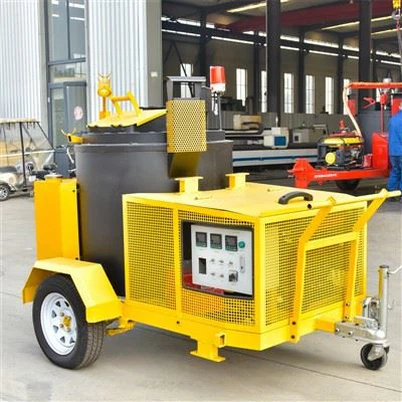
The IoT is expected to play a significant role in this area. Road clearing vehicles can be equipped with a variety of sensors, which can collect data on everything from vehicle performance to environmental conditions. These sensors can be connected to the internet, allowing for continuous data transmission and analysis. For example, an Asphalt Curing Vehicle 800L can be equipped with sensors to monitor the temperature and consistency of the asphalt, and this data can be sent to the traffic control center in real - time.
Artificial Intelligence (AI) and Machine Learning
AI and machine learning can be used to analyze the large amounts of data collected from road clearing vehicles and traffic control centers. These technologies can identify patterns, predict traffic conditions, and optimize vehicle routes. For example, AI algorithms can analyze historical data on road maintenance and traffic flow to predict areas where road clearing is likely to be required in the future.
5G Technology
The advent of 5G technology is expected to revolutionize communication in the transportation sector. 5G offers faster data transfer speeds, lower latency, and higher reliability compared to previous cellular networks. This means that road clearing vehicles can transmit and receive large amounts of data in real - time, enabling more efficient communication and operation.
Conclusion
As a supplier of road clearing vehicles, I understand the importance of effective communication between these vehicles and traffic control centers. It is not only a matter of operational efficiency but also of public safety. By leveraging the latest communication technologies and data exchange methods, we can ensure that road clearing operations are carried out smoothly and effectively.
If you are interested in our range of road clearing vehicles, which are designed to work seamlessly with modern communication systems, I encourage you to reach out for a procurement discussion. We are committed to providing high - quality vehicles and solutions that meet your specific needs.
References
- Transportation Research Board. (20XX). "Advances in Vehicle - Infrastructure Communication". National Academies Press.
- IEEE Transactions on Intelligent Transportation Systems. (20XX - 20XX). Various articles on vehicle - to - infrastructure communication.
- Cellular Telecommunications and Internet Association. (20XX). "Cellular Network Technologies for Transportation Applications".