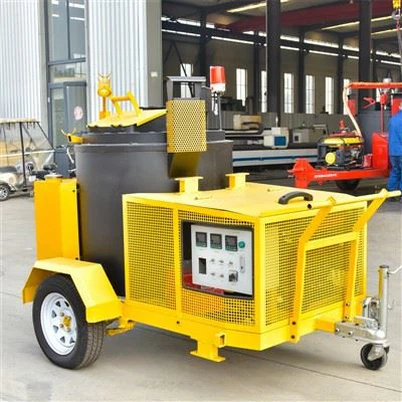
What is the working principle of a Road Mend Machine?
Leave a message

As a supplier of road mend machines, I've witnessed firsthand the transformative impact these remarkable pieces of equipment have on maintaining and restoring our roadways. In this blog, I'll delve into the working principle of a road mend machine, exploring the various components and processes that enable it to efficiently repair and rehabilitate damaged roads.
Understanding the Basics of Road Mend Machines
Road mend machines are specialized vehicles or equipment designed to address a wide range of road surface issues, including cracks, potholes, and pavement deterioration. These machines are equipped with advanced technologies and tools that allow them to perform tasks such as crack sealing, pothole filling, and asphalt resurfacing with precision and efficiency.
Key Components of a Road Mend Machine
1. Material Storage and Delivery System
One of the most critical components of a road mend machine is its material storage and delivery system. This system is responsible for storing and transporting the materials required for road repair, such as asphalt, cement, and sealants. The materials are typically stored in large tanks or hoppers on the machine and are delivered to the repair site through a series of pipes and hoses.
2. Heating and Mixing Unit
Many road mend machines are equipped with a heating and mixing unit to ensure that the repair materials are at the optimal temperature and consistency for application. This unit uses burners or electric heaters to heat the materials to the desired temperature and then mixes them thoroughly to create a homogeneous mixture. The heating and mixing process is crucial for ensuring that the repair materials adhere properly to the road surface and provide long-lasting results.
3. Application Tools
Road mend machines are equipped with a variety of application tools, such as spray nozzles, squeegees, and paving screeds, to apply the repair materials to the road surface. These tools are designed to distribute the materials evenly and precisely, ensuring that the repair is smooth and seamless. The type of application tool used depends on the specific repair task and the type of material being applied.
4. Control System
A modern road mend machine is typically equipped with a sophisticated control system that allows the operator to monitor and adjust the various functions of the machine. The control system may include sensors, gauges, and switches that provide real-time information about the machine's performance, such as temperature, pressure, and material flow rate. This allows the operator to make precise adjustments to ensure that the repair is carried out efficiently and effectively.
Working Principle of a Road Mend Machine
The working principle of a road mend machine can be divided into several stages, each of which plays a crucial role in the overall repair process.
1. Preparation
Before the repair work can begin, the road surface must be prepared to ensure that the repair materials adhere properly. This may involve cleaning the surface to remove dirt, debris, and loose asphalt, as well as marking the areas to be repaired. Some road mend machines are equipped with cleaning tools, such as blowers or vacuum systems, to facilitate this process.
2. Material Loading
Once the road surface is prepared, the repair materials are loaded into the machine's storage tanks or hoppers. The materials are typically transported to the repair site in bulk and are transferred to the machine using pumps or conveyors. The amount of material loaded depends on the size and scope of the repair job.
3. Heating and Mixing
After the materials are loaded, they are heated and mixed in the machine's heating and mixing unit. The heating process raises the temperature of the materials to the optimal level for application, while the mixing process ensures that they are thoroughly blended. This creates a homogeneous mixture that is ready for application to the road surface.
4. Application
Once the materials are heated and mixed, they are applied to the road surface using the appropriate application tools. For example, if the repair involves filling a pothole, the material may be poured into the hole using a hopper or a spray nozzle and then leveled off using a squeegee or a paving screed. If the repair involves sealing cracks, the material may be applied using a specialized crack sealing machine, such as the Asphalt Crack Sealing Machine or the Asphalt Crack sealing Machine.
5. Finishing
After the repair materials are applied, the surface is finished to ensure that it is smooth and even. This may involve using a roller or a vibrating plate to compact the material and remove any air bubbles. The finishing process also helps to ensure that the repair blends in seamlessly with the surrounding road surface.
Different Types of Road Mend Machines and Their Applications
There are several different types of road mend machines available, each designed to meet specific repair needs. Some of the most common types include:
1. Pothole Filling Machines
Pothole filling machines are designed to quickly and efficiently fill potholes in the road surface. These machines typically use a combination of asphalt and aggregate to fill the pothole and then compact the material to ensure a durable repair. Some pothole filling machines are also equipped with a heating system to ensure that the asphalt remains workable during the filling process.
2. Crack Sealing Machines
Crack sealing machines are used to seal cracks in the road surface to prevent water from penetrating and causing further damage. These machines apply a specialized sealant to the cracks using a spray nozzle or a squeegee. The sealant helps to prevent the cracks from expanding and extends the life of the road surface. The Asphalt Crack Sealing Machine and the Asphalt Crack sealing Machine are examples of crack sealing machines that are commonly used in road repair.
3. Asphalt Pavers
Asphalt pavers are used to lay new asphalt on the road surface or to resurface existing roads. These machines are equipped with a paving screed that spreads the asphalt evenly and compacts it as it is laid. Asphalt pavers can be used for a variety of applications, from small residential driveways to large highway projects.


4. Filling and Sewing All-in-one Machines
Filling and sewing all-in-one machines, such as the Filling and Sewing All-in-one Machine, are multifunctional machines that can perform both pothole filling and crack sealing operations. These machines are designed to provide a comprehensive solution for road repair, allowing operators to complete multiple tasks with a single piece of equipment.
Benefits of Using a Road Mend Machine
Using a road mend machine offers several benefits over traditional road repair methods. Some of the key benefits include:
1. Efficiency
Road mend machines are designed to perform repair tasks quickly and efficiently, reducing the time and labor required for road repair. This can result in significant cost savings for municipalities and road maintenance agencies.
2. Quality
Modern road mend machines are equipped with advanced technologies and tools that ensure a high-quality repair. The precise application of repair materials and the ability to control the temperature and consistency of the materials result in a more durable and long-lasting repair.
3. Safety
Using a road mend machine can improve safety for both road workers and motorists. The machine's automated processes reduce the need for workers to be in close proximity to traffic, minimizing the risk of accidents. Additionally, well-maintained roads are safer for motorists to drive on, reducing the risk of accidents and injuries.
4. Environmental Friendliness
Many road mend machines are designed to be more environmentally friendly than traditional road repair methods. For example, some machines use recycled materials in the repair process, reducing the amount of waste generated. Additionally, the efficient use of materials and energy helps to minimize the environmental impact of road repair.
Conclusion
In conclusion, the working principle of a road mend machine involves a combination of advanced technologies and processes that enable it to efficiently repair and rehabilitate damaged roads. From material storage and delivery to heating, mixing, and application, each stage of the repair process plays a crucial role in ensuring a high-quality and long-lasting repair. As a supplier of road mend machines, I am committed to providing our customers with the latest and most innovative equipment to meet their road repair needs. If you are interested in learning more about our road mend machines or would like to discuss your specific requirements, please feel free to contact us. We look forward to working with you to keep your roads in top condition.
References
- "Principles of Pavement Design," Second Edition, by Yang H. Huang
- "Asphalt Paving Handbook," Fourteenth Edition, by the Asphalt Institute
- "Crack Sealing and Filling Guide," by the National Asphalt Pavement Association