What is the weight of a typical road repair machine?
Leave a message

Hey there! As a supplier of road repair machines, I often get asked about the weight of a typical road repair machine. Well, it's not a one - size - fits - all answer, and in this blog, I'll break it down for you.
First off, let's understand that there are different types of road repair machines, each with its own unique functions and, of course, weights. Some of the common ones include asphalt pavers, road rollers, and crack sealing machines.
Asphalt pavers are pretty hefty pieces of equipment. They're used to lay asphalt on roads, and they come in various sizes. Smaller, more compact asphalt pavers, which are often used for smaller projects like parking lots or side streets, can weigh anywhere from 5,000 to 10,000 pounds (about 2268 to 4536 kilograms). These are great for jobs where space is limited, and maneuverability is key.
On the other hand, larger asphalt pavers, the ones you'd see on major highway construction projects, can be real behemoths. They can weigh upwards of 30,000 pounds (around 13608 kilograms). These big guys are designed to handle large volumes of asphalt and cover a wide area quickly. They're equipped with powerful engines and advanced technology to ensure a smooth and even asphalt lay.
Road rollers are another essential part of the road repair process. Their main job is to compact the asphalt after it's been laid by the paver. There are different types of road rollers, such as vibratory rollers and static rollers.
Small vibratory rollers, which are often used for light - duty work like compacting small patches of asphalt or in areas with limited access, can weigh around 2,000 to 5,000 pounds (about 907 to 2268 kilograms). These rollers use vibration to help compress the asphalt more effectively.
Medium - sized vibratory rollers, suitable for most standard road repair projects, typically weigh between 10,000 and 20,000 pounds (about 4536 to 9072 kilograms). They offer a good balance between power and maneuverability.
Large static rollers, used mainly on major highway projects, can be extremely heavy. Some of these giants can weigh over 40,000 pounds (around 18144 kilograms). Their weight is crucial for achieving the high - level of compaction required for long - lasting roads.
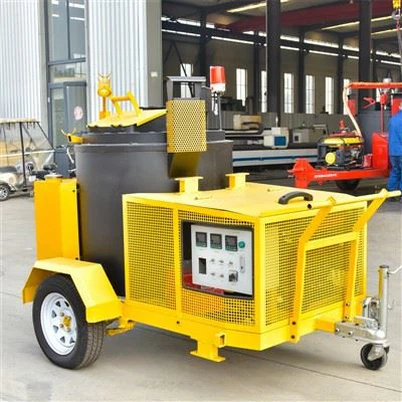
Crack sealing machines are a bit lighter compared to asphalt pavers and road rollers. These machines are used to fill cracks in the road surface to prevent water from seeping in and causing further damage. Small, handheld crack sealing machines can weigh as little as 50 to 100 pounds (about 23 to 45 kilograms). They're easy to operate and are great for small - scale crack repair jobs.
Larger, truck - mounted crack sealing machines can weigh anywhere from 5,000 to 15,000 pounds (about 2268 to 6804 kilograms). These machines have larger capacity tanks for holding the sealant and are more suitable for larger road networks.
Now, you might be wondering why the weight of these road repair machines matters. Well, it has a significant impact on several aspects of the road repair process.
The weight of an asphalt paver affects how much asphalt it can carry and lay at once. A heavier paver can typically handle more asphalt, which means fewer stops to refill, increasing the efficiency of the project.


For road rollers, weight is directly related to compaction. A heavier roller can apply more pressure to the asphalt, resulting in better compaction and a more durable road surface.
When it comes to transportation, the weight of the machines is also a crucial factor. Heavier machines may require special permits for transportation, and they can also have an impact on fuel consumption during transit.
If you're in the market for road repair machines, it's important to consider the weight based on your specific needs. If you're working on small, local projects, a lighter and more maneuverable machine might be the best choice. But for large - scale highway construction, you'll need the power and capacity that heavier machines offer.
In addition to the road repair machines I've mentioned, we also offer a range of related vehicles. You can check out our Road Sanitation Vehicle, which helps keep the roads clean before and after the repair work. Our Road Cleaning Vehicle is another great option for maintaining the cleanliness of the road surface. And if you're looking for a vehicle specifically designed for highway maintenance, our Highway Maintenance Car could be just what you need.
We understand that every road repair project is unique, and we're here to help you find the right equipment for your job. Whether you need a light - weight crack sealing machine or a heavy - duty asphalt paver, we've got you covered. Our team of experts can provide you with all the information you need to make an informed decision.
So, if you're interested in purchasing road repair machines or any of our related vehicles, don't hesitate to reach out. We're more than happy to discuss your requirements and provide you with a detailed quote. Let's work together to make your road repair projects a success!
References
- Construction Equipment Handbook, various editions
- Industry reports on road repair machinery