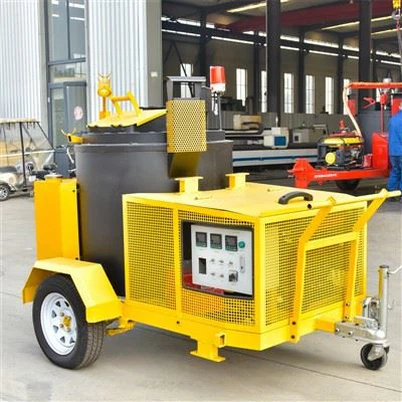
What is the power source of a road repair vehicle?
Leave a message

Hey there! As a supplier of road repair vehicles, I often get asked about what powers these machines. It's a pretty interesting topic, and I'm excited to share all the details with you.
First off, let's talk about the most common power sources for road repair vehicles. The two main ones are diesel engines and electric motors. Each has its own set of pros and cons, and the choice usually depends on a few factors like the type of work the vehicle will be doing, the environment it'll operate in, and the user's preferences.
Diesel Engines
Diesel engines have been around for a long time and are still a popular choice for many road repair vehicles. They're known for their power and durability, which makes them great for heavy-duty tasks.
One of the biggest advantages of diesel engines is their torque. Torque is what gives a vehicle the ability to move heavy loads and perform tough jobs. Road repair vehicles often need to carry around a lot of equipment and materials, like asphalt, gravel, and tools. Diesel engines can handle these heavy loads with ease, making them ideal for tasks like paving, filling potholes, and grading roads.
Another benefit of diesel engines is their fuel efficiency. Diesel fuel contains more energy per gallon than gasoline, which means diesel engines can go further on a single tank of fuel. This is especially important for road repair vehicles, which often need to cover long distances to reach job sites. With a diesel engine, you can save money on fuel costs and reduce the number of times you need to refuel.
However, diesel engines also have some drawbacks. One of the biggest issues is their emissions. Diesel engines produce more pollutants than gasoline engines, including nitrogen oxides (NOx), particulate matter (PM), and carbon monoxide (CO). These pollutants can have a negative impact on air quality and human health, especially in urban areas. To address this issue, many countries have implemented strict emissions standards for diesel engines, which require manufacturers to use advanced emission control technologies.
Another drawback of diesel engines is their noise level. Diesel engines are generally louder than gasoline engines, which can be a nuisance for workers and nearby residents. To reduce noise pollution, many road repair vehicles are equipped with noise-reducing features, such as mufflers and soundproofing materials.
Electric Motors
Electric motors are becoming an increasingly popular choice for road repair vehicles, thanks to their many advantages. Unlike diesel engines, electric motors produce zero emissions, which makes them a more environmentally friendly option. This is especially important in today's world, where there's a growing concern about climate change and air pollution.
One of the biggest benefits of electric motors is their efficiency. Electric motors convert more of the energy from the battery into motion than diesel engines, which means they can travel further on a single charge. This is especially important for road repair vehicles, which often need to operate for long periods of time without stopping. With an electric motor, you can save money on fuel costs and reduce your carbon footprint.
Another advantage of electric motors is their quiet operation. Electric motors are much quieter than diesel engines, which makes them ideal for use in urban areas and other noise-sensitive environments. This can help to reduce noise pollution and improve the quality of life for workers and nearby residents.
However, electric motors also have some limitations. One of the biggest challenges is their range. Electric vehicles typically have a shorter range than diesel vehicles, which means they may not be suitable for long-distance travel or jobs that require extended periods of operation. To address this issue, many electric road repair vehicles are equipped with large batteries and fast-charging capabilities, which can help to extend their range and reduce charging times.
Another limitation of electric motors is their power output. Electric motors generally have less power than diesel engines, which means they may not be suitable for heavy-duty tasks. However, advances in electric motor technology are making it possible to develop more powerful electric road repair vehicles, which can handle tasks like paving and grading roads.
Hybrid Systems
In addition to diesel engines and electric motors, some road repair vehicles are equipped with hybrid systems. Hybrid systems combine the benefits of both diesel engines and electric motors, offering improved fuel efficiency, reduced emissions, and increased power.
There are two main types of hybrid systems: parallel hybrids and series hybrids. In a parallel hybrid system, the diesel engine and electric motor are connected to the wheels through a transmission. The diesel engine provides power to the wheels directly, while the electric motor can assist the diesel engine when needed, such as during acceleration or when carrying heavy loads. In a series hybrid system, the diesel engine is used to generate electricity, which is then stored in a battery and used to power the electric motor. The electric motor provides power to the wheels directly, while the diesel engine operates at a constant speed to generate electricity.
Hybrid systems offer several advantages over traditional diesel engines and electric motors. One of the biggest benefits is their fuel efficiency. Hybrid systems can use the electric motor to assist the diesel engine, which can help to reduce fuel consumption and emissions. This is especially important for road repair vehicles, which often need to operate in stop-and-go traffic or perform tasks that require frequent acceleration and deceleration.
Another advantage of hybrid systems is their flexibility. Hybrid systems can operate in either electric mode or hybrid mode, depending on the driving conditions and the user's needs. In electric mode, the vehicle can operate quietly and emissions-free, which is ideal for use in urban areas and other noise-sensitive environments. In hybrid mode, the vehicle can use the diesel engine to provide additional power when needed, such as when carrying heavy loads or climbing hills.
Our Road Repair Vehicles
At our company, we offer a wide range of road repair vehicles powered by different sources. Whether you need a Road Surface Maintenance Vehicle for general road upkeep, an Electric Four-wheel Road Maintenance Vehicle for eco-friendly operations, or an Asphalt Curing Vehicle 800L for specific asphalt - related tasks, we've got you covered.


Our diesel - powered vehicles are built to last, with high - torque engines that can handle the toughest jobs. They're fuel - efficient and come with advanced emission control systems to minimize their environmental impact. On the other hand, our electric vehicles are perfect for urban areas where noise and emissions are a concern. They're quiet, efficient, and require less maintenance than diesel vehicles. And our hybrid vehicles combine the best of both worlds, offering the power of a diesel engine and the efficiency of an electric motor.
Conclusion
In conclusion, the power source of a road repair vehicle depends on a variety of factors, including the type of work it'll be doing, the environment it'll operate in, and the user's preferences. Diesel engines are powerful and durable, making them great for heavy - duty tasks, but they also produce more emissions and noise. Electric motors are environmentally friendly and efficient, but they have a shorter range and less power. Hybrid systems offer a combination of the benefits of both diesel engines and electric motors, providing improved fuel efficiency, reduced emissions, and increased flexibility.
If you're in the market for a road repair vehicle, I encourage you to consider your specific needs and requirements. We're here to help you find the right vehicle with the right power source for your job. Whether you're a small contractor or a large government agency, we have the expertise and the products to meet your needs. Don't hesitate to reach out to us for more information and to start a conversation about your road repair vehicle procurement. We're looking forward to working with you!
References
- "Diesel Engines: Principles, Performance, and Emissions." John Heywood, MIT Press.
- "Electric Vehicles: Technology and Applications." Steve LeVine, The MIT Press.
- "Hybrid Electric Vehicles: Principles and Applications with Practical Perspectives." Minggao Ouyang, Jiuchun Jiang, and Xiaosong Hu, John Wiley & Sons.