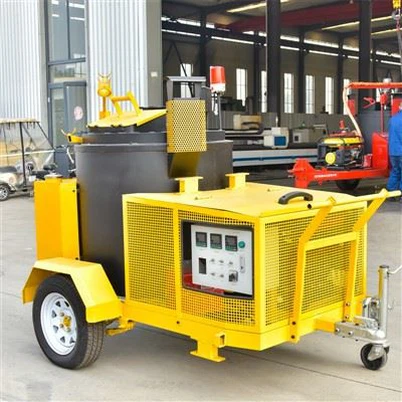
What is the power source of a road maintenance truck?
Leave a message

What is the power source of a road maintenance truck?
As a supplier of road maintenance trucks, I often get asked about the power sources that drive these essential vehicles. Road maintenance trucks play a crucial role in keeping our roads safe and in good condition, and understanding their power sources is key to appreciating their functionality and efficiency.
Traditional Internal Combustion Engines
For many years, internal combustion engines (ICEs) have been the dominant power source for road maintenance trucks. These engines work by burning a fuel, typically gasoline or diesel, inside a combustion chamber. The explosion of the fuel - air mixture creates pressure that forces pistons to move, which in turn rotates the crankshaft and provides power to the vehicle's wheels and other components.
Diesel engines are particularly popular in road maintenance trucks due to their high torque output. Torque is the rotational force that allows the truck to move heavy loads and operate equipment such as snowplows, sweepers, and asphalt spreaders. Diesel engines are also known for their fuel efficiency, which is important for long - hours of operation that road maintenance tasks often require.
However, internal combustion engines also have some drawbacks. They produce harmful emissions such as carbon monoxide, nitrogen oxides, and particulate matter, which contribute to air pollution and have negative impacts on human health and the environment. In addition, the cost of fuel can be a significant expense for road maintenance fleets, especially with fluctuating fuel prices.
Hybrid Power Systems
To address the limitations of traditional ICEs, many road maintenance truck manufacturers are now turning to hybrid power systems. A hybrid vehicle combines an internal combustion engine with an electric motor and a battery. The electric motor can assist the engine during acceleration, reducing the load on the engine and improving fuel efficiency. It can also operate independently at low speeds or in certain situations, such as when the truck is idling or moving slowly in traffic.
One of the main advantages of hybrid road maintenance trucks is their reduced emissions. By relying more on electric power, these vehicles produce fewer pollutants compared to their ICE - only counterparts. They also offer potential cost savings in the long run, as the electric motor can help reduce fuel consumption.
Hybrid systems can be configured in different ways. In a parallel hybrid, both the engine and the electric motor can directly power the wheels. In a series hybrid, the engine acts as a generator to charge the battery, and the electric motor is the sole source of power for the wheels. Some hybrid road maintenance trucks also use regenerative braking, which captures the energy normally lost during braking and stores it in the battery for later use.
Electric Power
Fully electric road maintenance trucks are also emerging as a viable option. These vehicles are powered solely by electric motors and rely on large - capacity batteries for energy storage. Electric trucks have several benefits. Firstly, they produce zero tailpipe emissions, making them an environmentally friendly choice. This is especially important in urban areas where air quality is a major concern.


Secondly, electric motors are more efficient than internal combustion engines. They convert a higher percentage of the stored energy into mechanical power, resulting in lower energy consumption. Electric trucks also have fewer moving parts compared to ICE vehicles, which means less maintenance and potentially lower operating costs over the vehicle's lifetime.
However, there are still some challenges associated with electric road maintenance trucks. One of the main issues is the limited range. The battery capacity determines how far the truck can travel on a single charge, and for road maintenance tasks that may require long - distance travel or extended periods of operation, this can be a significant limitation. Charging infrastructure is another concern. Adequate charging stations need to be available to ensure that the trucks can be recharged in a timely manner.
Alternative Fuels
In addition to hybrid and electric options, some road maintenance trucks are powered by alternative fuels. Compressed natural gas (CNG) and liquefied natural gas (LNG) are two such alternatives. Natural gas is a cleaner - burning fuel compared to gasoline and diesel, producing fewer emissions of greenhouse gases and pollutants. It is also often more cost - effective, especially in regions where natural gas is abundant.
Another alternative fuel is biodiesel, which is made from renewable resources such as vegetable oils and animal fats. Biodiesel can be used in diesel engines with little or no modification and offers a reduction in carbon emissions compared to petroleum - based diesel.
Hydrogen fuel cells are also being explored as a power source for road maintenance trucks. A fuel cell generates electricity through a chemical reaction between hydrogen and oxygen, producing only water vapor as a by - product. Fuel cell vehicles have the potential for long ranges and quick refueling times, but the technology is still relatively expensive and the infrastructure for hydrogen production and distribution is limited.
Applications and the Right Power Source
The choice of power source for a road maintenance truck depends on several factors, including the specific application of the truck. For example, a Road Repair Machine that needs to operate heavy equipment such as asphalt heaters and compactors may require a high - torque power source like a diesel engine or a hybrid system with a powerful engine component. These tasks often demand a continuous and reliable supply of power.
On the other hand, a Road Clearing Vehicle that is used for tasks like snow plowing and debris removal in urban areas may benefit from a hybrid or electric power source. The stop - and - go nature of these operations makes it easier to take advantage of the regenerative braking and electric - only operation features of hybrid and electric vehicles, reducing emissions and fuel consumption.
A Small Cleaning Vehicle that operates in confined spaces or on short - distance routes could be well - suited for an electric power source. The limited range requirement is less of an issue, and the zero - emissions advantage is particularly valuable in areas where air quality is a concern.
Conclusion
In conclusion, the power sources for road maintenance trucks are evolving rapidly. While traditional internal combustion engines still have their place, hybrid, electric, and alternative fuel options are becoming increasingly popular due to their environmental and economic benefits. As a road maintenance truck supplier, we are committed to offering a wide range of power - source options to meet the diverse needs of our customers.
If you are in the market for a road maintenance truck and want to learn more about the different power sources available and which one is right for your specific application, please feel free to contact us. We can provide you with detailed information and assist you in making an informed decision. Our team of experts is ready to help you find the most suitable road maintenance truck that meets your requirements and budget.
References
- SAE International. "Hybrid and Electric Vehicle Technologies."
- Environmental Protection Agency. "Alternative Fuels and Advanced Vehicles Data Center."
- Society of Automotive Engineers. "Internal Combustion Engine Fundamentals."