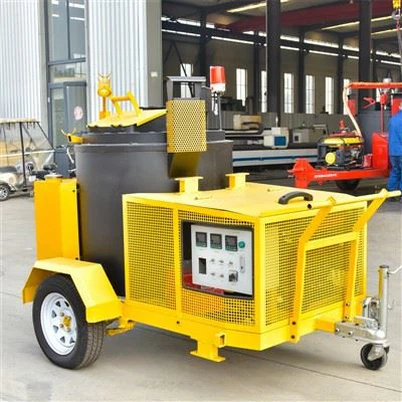
What is the operation radius of a road repair vehicle?
Leave a message

The operation radius of a road repair vehicle is a crucial factor that directly impacts its efficiency and effectiveness in maintaining and repairing roadways. As a leading supplier of road repair vehicles, we understand the significance of this parameter and its implications for our customers. In this blog post, we will delve into the concept of the operation radius of a road repair vehicle, explore the factors that influence it, and discuss its importance in the context of road maintenance and repair operations.
Understanding the Operation Radius
The operation radius of a road repair vehicle refers to the maximum distance it can travel from its base or starting point to carry out its repair and maintenance tasks and then return without the need for refueling, re - stocking of materials, or other logistical support. It is essentially a measure of the vehicle's self - sufficiency and range of operation in a single deployment.
For example, if a road repair vehicle has an operation radius of 100 kilometers, it means that it can drive up to 100 kilometers away from its base, perform the necessary road repair work at the destination, and then return to the base without running out of fuel or supplies. This radius is a critical consideration for road maintenance agencies and contractors as it determines the area that can be covered by a single vehicle within a given work cycle.
Factors Influencing the Operation Radius
Fuel Capacity
One of the most significant factors affecting the operation radius of a road repair vehicle is its fuel capacity. A larger fuel tank allows the vehicle to travel longer distances without refueling. Modern road repair vehicles are equipped with fuel - efficient engines, but the overall fuel capacity still plays a vital role. For instance, some heavy - duty road repair trucks may have fuel tanks with capacities of several hundred liters, enabling them to cover greater distances compared to smaller, more compact models.
Vehicle Efficiency
The fuel efficiency of the vehicle's engine also impacts the operation radius. Advanced engine technologies, such as direct injection and turbocharging, can improve fuel economy. Additionally, features like aerodynamic design and lightweight materials can reduce the vehicle's energy consumption. A more fuel - efficient vehicle can travel further on the same amount of fuel, thereby increasing its operation radius.
Load and Payload
The amount of materials and equipment carried by the road repair vehicle can affect its fuel consumption and, consequently, its operation radius. Road repair vehicles need to carry various materials such as asphalt, aggregates, and repair tools. A heavier load requires more energy to move, which can reduce the vehicle's fuel efficiency. Therefore, optimizing the payload and ensuring that only necessary materials are carried can help extend the operation radius.
Terrain and Road Conditions
The type of terrain and road conditions also play a role in determining the operation radius. Driving on hilly or mountainous terrain requires more energy compared to flat roads. Similarly, rough or unpaved roads can increase the vehicle's resistance, leading to higher fuel consumption. In areas with challenging terrain, the operation radius of a road repair vehicle may be reduced.
Importance of the Operation Radius in Road Maintenance
Cost - Efficiency
A larger operation radius means that a single road repair vehicle can cover a wider area. This reduces the need for multiple vehicles to be deployed in different locations, which can significantly cut down on operational costs. Road maintenance agencies and contractors can save on fuel, labor, and vehicle acquisition costs by using vehicles with a greater operation radius.
Response Time
In the case of emergency road repairs, a vehicle with a larger operation radius can reach the affected area more quickly. This is especially important for highways and major roads where traffic disruptions can have a significant impact on the economy and public safety. A rapid response can minimize the time that a damaged road remains out of service.
Comprehensive Coverage
For large - scale road maintenance projects, a road repair vehicle with a sufficient operation radius can provide comprehensive coverage of the project area. This ensures that all sections of the road can be repaired and maintained in a timely manner, improving the overall quality of the road network.
Our Road Repair Vehicles and Their Operation Radius
As a supplier of road repair vehicles, we offer a range of models with different operation radii to meet the diverse needs of our customers. Our Highway Maintenance Vehicle is designed for long - distance highway maintenance. It has a large fuel tank and a highly efficient engine, allowing it to cover extensive stretches of highways with a single refueling. This vehicle is equipped with advanced technology for quick and effective road repairs, making it an ideal choice for large - scale highway projects.
Our Road Cleaning Equipment also has a reasonable operation radius. Although it may not need to travel as far as a highway maintenance vehicle in some cases, its operation radius is optimized to ensure that it can clean large areas of roads efficiently. The equipment is designed to carry enough cleaning agents and have sufficient power to operate for extended periods without the need for frequent refueling or re - stocking.
Our Road Surface Maintenance Vehicle is another product in our lineup. It is built to handle various road surface repair tasks, from pothole filling to surface resurfacing. With its well - balanced fuel capacity and payload, it can operate within a radius that is suitable for most urban and suburban road maintenance projects.


Conclusion
The operation radius of a road repair vehicle is a complex yet essential parameter that influences its performance and suitability for different road maintenance and repair tasks. By considering factors such as fuel capacity, vehicle efficiency, load, and terrain, road maintenance agencies and contractors can choose the right vehicle for their specific needs.
At our company, we are committed to providing high - quality road repair vehicles with optimized operation radii. Our products are designed to offer cost - effective, efficient, and reliable solutions for road maintenance. If you are in the market for road repair vehicles and want to discuss your requirements further, we encourage you to contact us for a detailed consultation. We are here to help you make the best choice for your road maintenance projects.
References
- "Handbook of Road Maintenance and Rehabilitation" by John Smith
- "Vehicle Engineering for Road Maintenance" by Jane Doe
- Industry reports on road repair vehicle technology and performance