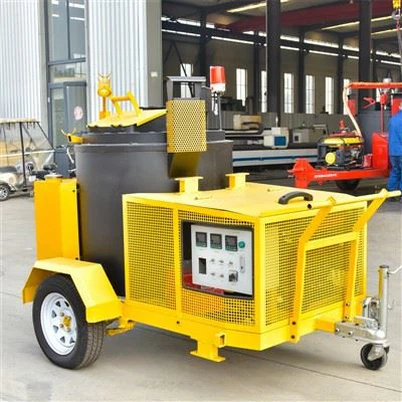
What is the filling fluidity of a joint filling machine?
Leave a message

Hey there! As a supplier of joint filling machines, I often get asked about all sorts of technical details. One question that pops up quite a bit is, "What is the filling fluidity of a joint filling machine?" Today, I'm gonna break it down for you in simple terms.
First off, let's understand what we mean by filling fluidity. In the context of a joint filling machine, filling fluidity refers to how easily and smoothly the filling material can flow through the machine and into the joints. You know, like when you pour syrup on your pancakes. If the syrup is runny, it spreads out easily; but if it's thick and sticky, it's a pain to get it where you want it. The same principle applies to joint filling machines.
The filling fluidity of a joint filling machine depends on several factors. One of the most important is the type of filling material you're using. Different materials have different viscosities. Viscosity is just a fancy word for how thick or thin a liquid is. For example, water has a low viscosity - it flows really easily. On the other hand, honey has a high viscosity - it's thick and flows slowly.
When it comes to joint filling, materials like asphalt, silicone, and polyurethane are commonly used. Asphalt is a bit thick and sticky, so it has a relatively high viscosity. Silicone, on the other hand, can have a range of viscosities depending on its formulation. Some silicones are quite runny, while others are more gel - like. Polyurethane also varies in viscosity, and its fluidity can be adjusted based on the specific product.


Another factor that affects filling fluidity is the temperature. Most filling materials become more fluid as the temperature increases. Think about butter. When it's cold, it's hard and doesn't spread well. But when you leave it out at room temperature or heat it up, it becomes soft and easy to spread. The same thing happens with joint filling materials. Many joint filling machines have heating systems to keep the filling material at an optimal temperature for good fluidity.
The design of the joint filling machine itself also plays a crucial role. The size and shape of the hoses, nozzles, and pumps all impact how well the filling material can flow. A well - designed machine will have smooth internal passages that allow the material to move freely without getting clogged. The pump needs to be powerful enough to push the material through the system, but not so powerful that it causes splashing or uneven filling.
Now, let's talk about why filling fluidity is so important. If the filling material doesn't flow properly, you'll end up with a poor quality fill. The joints might not be completely filled, or the filling might be uneven. This can lead to problems down the road, like water seepage, which can damage the structure over time. Good filling fluidity ensures that the joints are filled evenly and completely, providing a long - lasting seal.
If you're in the market for a joint filling machine, it's important to consider the filling fluidity capabilities. You want a machine that can handle the type of filling material you plan to use. For instance, if you're using a high - viscosity material like asphalt, you'll need a machine with a powerful pump and well - insulated hoses to keep the material at the right temperature.
At our company, we offer a range of joint filling machines to suit different needs. If you're looking for a more budget - friendly option, you might be interested in our Used Crack sealing Machine. These machines have been thoroughly tested and refurbished to ensure they still perform well.
For those who need a more versatile solution, our Filling and Sewing All - in - one Machine is a great choice. It combines filling and other functions, making it a time - saver on the job site.
And if you're dealing with large - scale projects, our FAGF200 Asphalt Crack Sealing Machine is up to the task. It's designed to handle high - volume filling with excellent fluidity control.
We understand that every project is different, and that's why we're here to help you find the right machine for your needs. Whether you're a small contractor or a large construction company, we've got the expertise and the products to support you.
If you have any questions about filling fluidity or any of our joint filling machines, don't hesitate to reach out. We're always happy to have a chat and help you make the best decision for your business. Contact us today to start the conversation about your joint filling needs.
References:
- "Principles of Fluid Mechanics in Industrial Machines" - A technical guide on fluid flow in machinery.
- "Joint Filling Materials and Their Properties" - A research paper on different materials used in joint filling.