What is the difference between different types of road clearing vehicles?
Leave a message

Road clearing vehicles play a crucial role in maintaining the cleanliness, safety, and functionality of our roads. As a leading supplier of road clearing vehicles, I've witnessed firsthand the diverse needs of different road - clearing scenarios and the specialized vehicles designed to meet them. In this blog, we'll explore the differences between various types of road clearing vehicles, their unique features, and the specific tasks they are best suited for.
Street Sweepers
Street sweepers are one of the most common types of road clearing vehicles. Their primary function is to remove debris, dirt, leaves, and other small particles from the road surface. These vehicles are equipped with large rotating brushes that sweep the debris into a collection hopper.
There are two main types of street sweepers: mechanical and regenerative air sweepers. Mechanical sweepers use brushes to physically push the debris into the hopper. They are simple in design and are effective for cleaning large, heavy debris such as stones and branches. However, they may not be as efficient at picking up fine dust particles.
On the other hand, regenerative air sweepers use a powerful vacuum system to suck up debris. The air is circulated within the vehicle, allowing it to capture and retain fine dust. This makes them ideal for areas with high levels of dust, such as construction sites or industrial areas. [1]
Street sweepers are essential for maintaining the aesthetic appeal of urban areas and preventing debris from clogging storm drains. They are commonly used in city streets, parking lots, and sidewalks. If you are looking for a reliable street sweeper, we offer a wide range of models to meet your specific needs.
Snow Plows
In regions with cold climates, snow plows are indispensable for keeping roads safe and passable during the winter months. Snow plows are attached to the front of a vehicle, typically a truck, and are used to push snow off the road surface.
There are several types of snow plows, including straight blade plows, V - blade plows, and wing plows. Straight blade plows are the simplest and most common type. They are effective for clearing light to moderate snowfalls on straight roads. V - blade plows, on the other hand, can be adjusted into a V - shape, which allows them to cut through heavy snow and push it to the sides more efficiently. Wing plows are additional extensions that can be attached to the main plow blade, increasing the width of the clearing path. [2]
Snow plows are often used in combination with salt spreaders, which distribute salt or other de - icing agents on the road to prevent ice from forming. This combination helps to ensure that roads remain safe for drivers and pedestrians during winter weather.
Debris Loaders
Debris loaders are designed to pick up and transport large amounts of debris, such as branches, logs, and construction waste. These vehicles are equipped with a large intake hopper and a powerful suction system that can quickly load debris into a storage container.
Debris loaders are commonly used in forestry, construction, and landscaping industries. They can significantly reduce the time and labor required to clean up large debris. For example, in a forestry operation, a debris loader can quickly clear fallen trees and branches after a logging activity. [3]
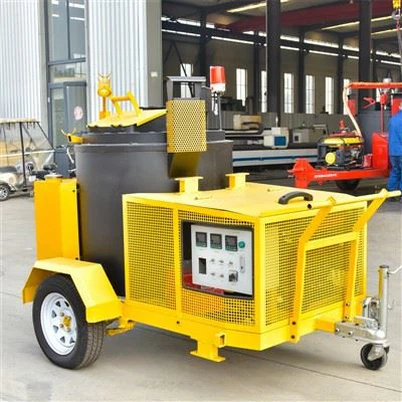
Road Repair Machine
Road repair machines are specialized vehicles used for fixing damaged roads. They can perform a variety of tasks, such as filling potholes, resurfacing roads, and repairing cracks.
These machines are equipped with different tools and equipment, such as asphalt heaters, pavers, and compactors. Asphalt heaters are used to heat the asphalt to the proper temperature for application, while pavers spread the hot asphalt evenly on the road surface. Compactors then compress the asphalt to ensure a smooth and durable finish.
Road repair machines are essential for maintaining the integrity of the road network. They can prevent small road damages from becoming major problems, reducing the risk of accidents and improving the overall quality of the roads.
Multi Functional Ground Maintenance Vehicle
Multi - functional ground maintenance vehicles are versatile machines that can perform multiple road - clearing tasks. They are typically equipped with a combination of brushes, sweepers, mowers, and other tools.
These vehicles can be used for a wide range of applications, including street cleaning, lawn mowing, and sidewalk maintenance. For example, they can sweep the streets in the morning and then mow the grass along the roadside in the afternoon. This versatility makes them a cost - effective solution for municipalities and private contractors. [4]
Pedestrian Cleaning Vehicle
Pedestrian cleaning vehicles are designed specifically for cleaning sidewalks, bike paths, and other areas where pedestrians are present. These vehicles are smaller and more maneuverable than traditional road clearing vehicles, allowing them to navigate narrow spaces and around obstacles.
They are equipped with brushes and vacuum systems that can effectively clean debris, dirt, and litter from pedestrian areas. Pedestrian cleaning vehicles are essential for maintaining the safety and cleanliness of public spaces, especially in crowded urban areas.
Choosing the Right Road Clearing Vehicle
When choosing a road clearing vehicle, several factors need to be considered. First, you need to determine the specific tasks you need the vehicle to perform. For example, if you are mainly responsible for snow removal, a snow plow and salt spreader would be the most appropriate choice. If you need to clean urban streets, a street sweeper or a Multi Functional Ground Maintenance Vehicle might be more suitable.
Second, you need to consider the size and capacity of the vehicle. Larger vehicles may be more powerful and have a greater capacity, but they may also be more difficult to maneuver in tight spaces. Smaller vehicles, on the other hand, are more agile but may have limited capacity.


Finally, you need to consider the cost of the vehicle, including the purchase price, maintenance costs, and fuel consumption. It's important to choose a vehicle that offers the best value for your money.
As a supplier of road clearing vehicles, we understand the importance of choosing the right vehicle for your specific needs. Our team of experts can provide you with professional advice and guidance to help you make an informed decision.
Conclusion
In conclusion, different types of road clearing vehicles are designed to perform specific tasks, and understanding their differences is crucial for effective road maintenance. Whether you need to sweep the streets, remove snow, clean up debris, or repair roads, there is a vehicle that can meet your needs.
We are committed to providing high - quality road clearing vehicles and excellent customer service. If you are interested in purchasing a road clearing vehicle or have any questions about our products, please don't hesitate to contact us. We look forward to discussing your requirements and finding the perfect solution for you.
References
[1] Smith, J. (2018). Street Sweeper Technology: A Review. Journal of Urban Maintenance, 12(3), 45 - 52.
[2] Johnson, A. (2019). Snow Plow Design and Operation in Cold Climates. Cold Regions Engineering Journal, 20(1), 67 - 75.
[3] Brown, K. (2020). Debris Loaders: Efficiency and Applications. Industrial Cleaning Magazine, 15(2), 23 - 30.
[4] Wilson, R. (2021). Multi - Functional Ground Maintenance Vehicles: A New Approach to Road Cleaning. International Journal of Road Maintenance, 18(4), 89 - 98.