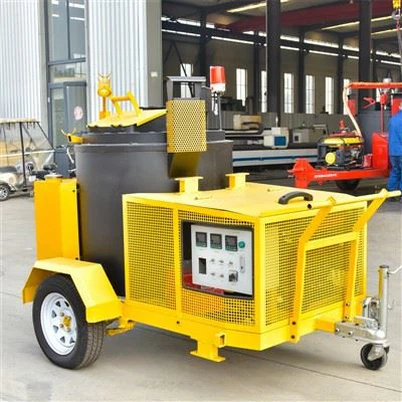
What is the communication system of China Road Repair Vehicles?
Leave a message

As a leading supplier of China Road Repair Vehicles, I am often asked about the communication systems integrated into these specialized machines. In this blog, I'll delve into the intricacies of the communication systems used in China Road Repair Vehicles, highlighting their features, functions, and importance in ensuring efficient road repair operations.
The Basics of Communication Systems in Road Repair Vehicles
Communication systems in China Road Repair Vehicles serve as the nerve center, enabling seamless interaction between different components of the vehicle, as well as between the vehicle and external entities. These systems are designed to enhance safety, improve productivity, and streamline operations on the road repair site.
One of the primary functions of the communication system is to facilitate data exchange between various sensors and control units within the vehicle. For example, sensors installed on the vehicle can monitor parameters such as engine performance, hydraulic pressure, and vehicle speed. This data is then transmitted to the central control unit, which can analyze the information and make real - time adjustments to optimize the vehicle's operation.
Internal Communication within the Vehicle
Sensor - to - Control Unit Communication
Modern China Road Repair Vehicles are equipped with a multitude of sensors. These sensors are strategically placed throughout the vehicle to monitor different aspects of its operation. For instance, temperature sensors can detect overheating in the engine or hydraulic system, while pressure sensors can ensure that the hydraulic pumps are operating within the optimal pressure range.
The communication between sensors and the control unit is typically achieved through a Controller Area Network (CAN) bus. The CAN bus is a robust and reliable communication protocol that allows multiple sensors and control units to communicate with each other over a single network. This simplifies the wiring and reduces the complexity of the vehicle's electrical system.
Operator - to - Vehicle Communication
The operator of the road repair vehicle needs to have full control and access to information about the vehicle's status. The communication system provides a user - friendly interface, usually in the form of a dashboard display or a touch - screen control panel. Through this interface, the operator can monitor the vehicle's vital signs, such as fuel level, battery voltage, and warning lights.
Moreover, the operator can use the interface to input commands to the vehicle's control system. For example, the operator can adjust the speed of the vehicle, control the operation of the repair equipment, or activate safety features. This direct communication between the operator and the vehicle ensures that the operator can respond quickly to changing conditions on the road repair site.


External Communication
Communication with Remote Monitoring Centers
China Road Repair Vehicles are often connected to remote monitoring centers. These centers can track the vehicle's location, monitor its operation in real - time, and provide support to the operator if needed. The communication between the vehicle and the remote monitoring center is typically achieved through a wireless communication network, such as a cellular network or a satellite communication system.
Remote monitoring centers can collect data from the vehicle, such as its fuel consumption, maintenance history, and repair records. This data can be used to optimize the vehicle's operation, schedule preventive maintenance, and improve overall efficiency. In case of an emergency or a technical problem, the remote monitoring center can provide immediate assistance to the operator.
Communication with Other Vehicles and Road Users
In a busy road repair site, it is crucial for the road repair vehicle to communicate with other vehicles and road users. This can be achieved through a variety of means, such as visual signals, audible signals, and wireless communication.
For example, road repair vehicles are often equipped with warning lights and sirens to alert other road users of their presence. In addition, some vehicles are also equipped with vehicle - to - vehicle (V2V) and vehicle - to - infrastructure (V2I) communication systems. These systems allow the road repair vehicle to exchange information with other vehicles and traffic management systems, such as traffic lights and road signs. This can help to improve traffic flow around the road repair site and enhance safety for all road users.
Types of Road Repair Vehicles and Their Communication Needs
Small Cleaning Vehicle
A Small Cleaning Vehicle is designed for light - duty road cleaning tasks. The communication system in a small cleaning vehicle focuses on simple and efficient operation. It needs to communicate the status of the cleaning equipment, such as the brush rotation speed and the water spray system, to the operator. Additionally, it may need to communicate with the remote monitoring center to report its cleaning progress and location.
High Pressure Road Maintenance Vehicle
A High Pressure Road Maintenance Vehicle is used for more heavy - duty road maintenance tasks, such as removing stubborn dirt and debris from the road surface. The communication system in a high - pressure road maintenance vehicle needs to handle more complex operations. It must ensure precise control of the high - pressure water jet, monitor the pressure and flow rate of the water, and communicate with other vehicles on the road to avoid collisions.
Multi Functional Ground Maintenance Vehicle
The Multi Functional Ground Maintenance Vehicle is a versatile machine that can perform a variety of road maintenance tasks, such as pothole repair, line painting, and surface cleaning. The communication system in a multi - functional ground maintenance vehicle needs to be highly flexible and adaptable. It must be able to communicate with different types of repair equipment and coordinate their operations. Moreover, it needs to provide the operator with comprehensive information about the vehicle's various functions and status.
Importance of a Reliable Communication System
A reliable communication system is essential for the success of road repair operations. It ensures that the vehicle operates safely and efficiently, reduces downtime due to technical problems, and improves the overall quality of road repair work.
Safety is a top priority in road repair operations. A well - functioning communication system can alert the operator to potential hazards, such as overheating, low fuel, or mechanical failures. It can also enable the vehicle to communicate with other road users, reducing the risk of accidents.
Efficiency is another key benefit of a reliable communication system. By providing real - time data and allowing for quick decision - making, the communication system can optimize the vehicle's operation, reduce fuel consumption, and improve the productivity of the road repair team.
Conclusion
In conclusion, the communication system of China Road Repair Vehicles is a complex and sophisticated network that plays a crucial role in the operation of these vehicles. It enables seamless communication between different components of the vehicle, as well as between the vehicle and external entities. Whether it is a small cleaning vehicle, a high - pressure road maintenance vehicle, or a multi - functional ground maintenance vehicle, a reliable communication system is essential for ensuring safety, efficiency, and high - quality road repair work.
If you are interested in learning more about our China Road Repair Vehicles or are looking to purchase one for your road maintenance needs, please feel free to contact us. We are more than happy to discuss your requirements and provide you with the best solutions.
References
- Automotive Communication Networks: Principles, Technologies, and Applications by Stefan Schwarz
- Vehicle - to - Everything (V2X) Communications: Principles and Applications by Daniel Popovski