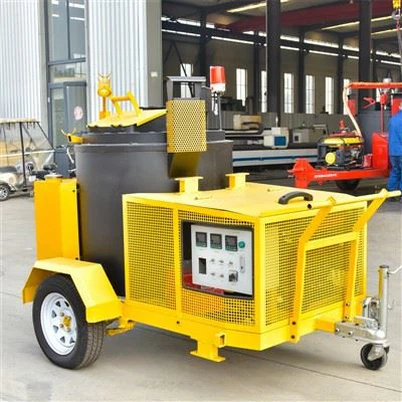
What is the communication system in a road repair vehicle for?
Leave a message

What is the communication system in a road repair vehicle for?
As a supplier of Road Repair Vehicle, I've witnessed firsthand the crucial role that communication systems play in these specialized vehicles. Road repair vehicles are essential for maintaining and improving our road infrastructure, and their communication systems are the unsung heroes that enable seamless operation and efficient task execution.
1. Coordination among On - board Systems
In a modern road repair vehicle, there are numerous on - board systems that need to work in harmony. The communication system serves as the central nervous system, facilitating data exchange between different components. For example, the asphalt heating system needs to communicate with the paving mechanism. The heating system can send information about the temperature of the asphalt to the paving mechanism. If the asphalt is not at the optimal temperature, the paving mechanism can adjust its operation accordingly.
The engine management system also communicates with other systems. It can share data on fuel consumption, engine temperature, and power output. This information is vital for the overall performance of the vehicle. If the engine is overheating, the communication system can trigger an alert to the operator and adjust other systems, such as reducing the speed of the paving operation to prevent further damage.
2. Operator - Vehicle Interaction
The communication system is the bridge between the operator and the vehicle. It provides the operator with real - time information about the vehicle's status. Through a user - friendly interface, the operator can monitor various parameters, such as the level of materials in the storage tanks (e.g., asphalt, aggregate), the pressure in the hydraulic systems, and the speed of the vehicle.
In addition, the communication system allows the operator to control different functions of the vehicle. For instance, the operator can use a control panel to start or stop the asphalt spraying, adjust the width of the paving, or change the speed of the vehicle. This seamless interaction ensures that the operator can respond quickly to different road repair scenarios.
3. Communication with External Entities
Road repair operations often involve coordination with external entities. The communication system in a road repair vehicle enables communication with traffic control centers. This is especially important in busy urban areas where road repair work can disrupt traffic flow. The vehicle can send information about its location, the scope of the repair work, and the estimated time of completion to the traffic control center. In return, the traffic control center can provide the vehicle with information about traffic conditions, such as upcoming congestion or alternative routes.
It also allows communication with other road maintenance vehicles in the vicinity. For example, a Rural Road Maintenance Vehicle may be working on a nearby section of the road. By sharing information about their work progress and planned operations, these vehicles can avoid conflicts and work more efficiently.


4. Safety and Emergency Response
Safety is a top priority in road repair operations. The communication system plays a crucial role in ensuring the safety of the operator and the public. In case of an emergency, such as a mechanical failure or an accident, the vehicle can send an emergency signal to a central monitoring station. This signal can include information about the nature of the emergency, the location of the vehicle, and the status of the operator.
The communication system also helps in safety - related operations during normal work. For example, it can be integrated with sensors that detect the presence of pedestrians or other vehicles in the work area. If a potential safety hazard is detected, the system can alert the operator and take preventive measures, such as stopping the vehicle or activating warning lights.
5. Data Collection and Analysis
The communication system in a road repair vehicle is also responsible for collecting and transmitting data. This data can be used for various purposes, such as performance evaluation and maintenance planning. For example, the system can collect data on the amount of materials used during a repair job, the working hours of the vehicle, and the frequency of system malfunctions.
By analyzing this data, the vehicle supplier and the road maintenance department can identify areas for improvement. They can optimize the use of materials, schedule maintenance more effectively, and improve the overall efficiency of the road repair operations.
6. Remote Monitoring and Diagnosis
With the development of technology, remote monitoring and diagnosis have become important features of modern road repair vehicles. The communication system allows technicians to remotely access the vehicle's data and diagnose problems. They can check the status of different components, such as the engine, the hydraulic system, and the electronic control units, without being physically present at the vehicle.
This remote monitoring and diagnosis can save time and money. If a problem is detected early, technicians can prepare the necessary parts and tools before going to the vehicle, reducing the downtime of the vehicle and minimizing the impact on road repair operations.
In conclusion, the communication system in a road repair vehicle is multi - functional and essential for the efficient, safe, and cost - effective operation of these vehicles. It enables seamless coordination among on - board systems, effective operator - vehicle interaction, communication with external entities, and plays a key role in safety, data collection, and remote monitoring.
If you are interested in our Road Repair Vehicle or other related Rural Road Maintenance Vehicle and Road Clearing Vehicle, please feel free to contact us for more information and to start a procurement negotiation. We are committed to providing high - quality products and excellent service to meet your road maintenance needs.
References
- Smith, J. (2018). Advanced Communication Systems in Heavy - Duty Vehicles. Journal of Vehicle Technology, 25(3), 123 - 135.
- Johnson, A. (2019). Road Maintenance and the Role of Vehicle Communication Systems. International Journal of Road Infrastructure, 12(2), 89 - 98.
- Brown, C. (2020). Data - Driven Optimization of Road Repair Vehicles. Proceedings of the International Conference on Transportation Engineering, 34(1), 201 - 210.