What is the capacity of a typical road clearing vehicle?
Leave a message

Hey there! I'm part of a road clearing vehicle supplier team, and today I wanna talk about the capacity of a typical road clearing vehicle. You might be thinking, "Why does capacity matter?" Well, it's super important because it directly affects how efficient these vehicles are in getting the job done.
Let's start by understanding what we mean by "capacity" in the context of road clearing vehicles. Capacity can refer to different things, like the amount of debris a vehicle can hold, the volume of liquid it can carry for cleaning or de - icing, or the power it has to operate for a certain period.
Debris - Holding Capacity
One of the most common types of road clearing involves picking up trash, leaves, and other debris from the streets. For these vehicles, the debris - holding capacity is crucial. A typical medium - sized road sweeper might have a hopper capacity ranging from 5 to 10 cubic meters. This means it can collect a significant amount of debris before it needs to be emptied.
Smaller, more maneuverable sweepers, often used in narrow streets or parking lots, may have a capacity of around 2 to 3 cubic meters. On the other hand, large - scale industrial sweepers used on highways or major roads can have capacities upwards of 15 cubic meters.
The size of the hopper affects the frequency of trips back to the disposal site. A vehicle with a larger hopper can cover more ground before it has to stop and unload, which saves time and fuel. For example, if you're cleaning a long stretch of a busy highway, a high - capacity sweeper will be much more efficient than a smaller one.
Liquid - Carrying Capacity
Many road clearing vehicles are also equipped to handle liquids. For instance, some are used for street washing, where they spray water to clean the road surface. These vehicles usually have water tanks with capacities that can range from 2,000 to 10,000 liters.
In areas with cold climates, de - icing vehicles are a common sight. They carry a mixture of salt and water or other de - icing agents in large tanks. A typical de - icing truck might have a tank capacity of 5,000 to 8,000 liters. This allows them to cover a large area of the road before they need to refill the tank.
The liquid - carrying capacity is important because it determines how far the vehicle can travel and how much area it can treat before having to return to a filling station. If you're responsible for maintaining a large urban area, a vehicle with a higher liquid capacity will be more cost - effective in the long run.
Power and Operating Capacity
Another aspect of capacity is the power and operating capacity of the vehicle. This refers to how long the vehicle can run without needing a recharge or refuel. For diesel - powered road clearing vehicles, the fuel tank capacity plays a big role. A typical diesel - powered sweeper or de - icing truck might have a fuel tank capacity of 200 to 500 liters. This allows them to operate for several hours, depending on the workload.
Electric road clearing vehicles are becoming more popular these days. Their operating capacity is measured by the battery life. A well - designed electric sweeper can operate for 6 to 8 hours on a single charge, which is sufficient for most daily cleaning tasks in urban areas.
The power and operating capacity are vital because it affects the overall productivity of the vehicle. A vehicle that can run for longer periods without interruption can complete more jobs in a day, which is great for both the service provider and the client.
Our Product Range
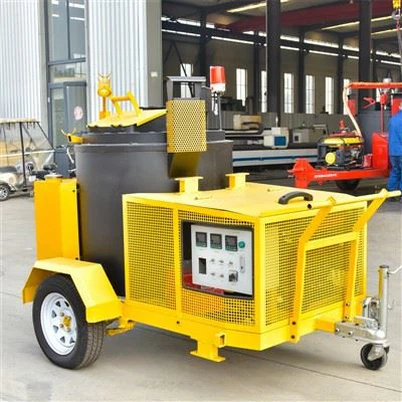
As a road clearing vehicle supplier, we offer a wide range of vehicles with different capacities to meet various needs. If you're looking for a vehicle for small - scale cleaning jobs, our Asphalt Recycling and Maintenance Vehicle 2000L is a great option. It has a decent liquid - carrying capacity and is very maneuverable.
For more heavy - duty road repair and maintenance tasks, our Road Repair Machine is a top - notch choice. It's designed to handle large - scale projects with ease.
And if you need a vehicle for general road surface maintenance, our Road Surface Maintenance Vehicle is a reliable option. It has a good balance of debris - holding and liquid - carrying capacities.
Why Choose Us?
We understand that every client has different requirements when it comes to road clearing vehicles. That's why we offer a variety of options with different capacities. Our vehicles are built with high - quality materials and the latest technology, ensuring reliability and efficiency.


We also provide excellent after - sales service, including maintenance and repair. Our team of experts is always ready to assist you with any questions or issues you might have. Whether you're a small municipality or a large construction company, we have the right vehicle for you.
Let's Talk
If you're in the market for a road clearing vehicle and want to discuss your specific needs, we'd love to hear from you. We can help you choose the vehicle with the right capacity for your projects. Don't hesitate to reach out and start a conversation about your road clearing vehicle requirements.
References
- "Handbook of Road Maintenance Vehicles" - A comprehensive guide on different types of road maintenance and clearing vehicles and their specifications.
- Industry reports from leading road maintenance vehicle manufacturers, which provide detailed information on vehicle capacities and performance.