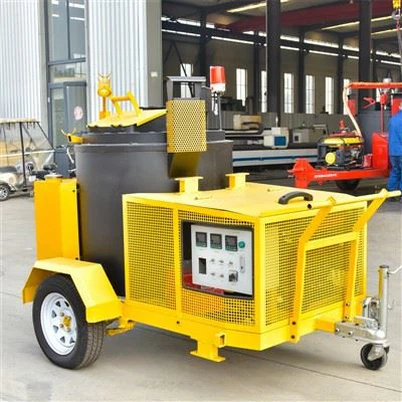
What are the noise levels of a road repair vehicle?
Leave a message

Noise is an inevitable by - product of many industrial and construction activities, and road repair work is no exception. As a supplier of road repair vehicles, understanding the noise levels of these vehicles is crucial, not only for regulatory compliance but also for the well - being of workers and the public.
1. Importance of Studying Noise Levels
The noise generated by road repair vehicles can have multiple negative impacts. For workers operating these vehicles, long - term exposure to high - level noise can lead to hearing loss, stress, and reduced work efficiency. According to the World Health Organization, continuous exposure to noise levels above 85 decibels (dB) can cause permanent hearing damage. In the case of the general public, noise from road repair activities can disrupt daily life, cause annoyance, and even have adverse effects on mental health.

2. Factors Affecting the Noise Levels of Road Repair Vehicles
2.1 Engine Noise
The engine is one of the primary sources of noise in road repair vehicles. The size, type, and power of the engine play significant roles in determining the noise level. Larger engines with higher power outputs generally produce more noise. For example, a heavy - duty road repair vehicle with a large diesel engine may generate noise levels in the range of 90 - 100 dB at the source. Modern engines are designed with noise - reduction technologies such as mufflers and engine enclosures. However, as engines age, the effectiveness of these noise - reduction measures may decrease, leading to increased noise emissions.
2.2 Working Equipment Noise
Road repair vehicles are equipped with various working equipment, such as asphalt pavers, milling machines, and compressors. Each of these devices has its own unique noise characteristics. Asphalt pavers, for instance, generate noise when spreading and compacting asphalt. The rotating augers and vibrating screeds can produce high - frequency noise. Milling machines, which are used to remove the top layer of the road surface, create a loud grinding noise. The noise level of a milling machine can reach up to 110 dB at the source, making it one of the noisiest pieces of equipment in road repair operations. Compressors, which are used to power pneumatic tools, also contribute to the overall noise level of the vehicle.
2.3 Vehicle Movement and Interaction with the Road Surface
The movement of the vehicle itself, including the friction between the tires and the road surface, can generate noise. Uneven road surfaces can increase the noise level as the vehicle vibrates more. Additionally, the interaction between the vehicle's components, such as the transmission and suspension systems, can produce noise. When the vehicle is accelerating, decelerating, or turning, the noise level may also change.
3. Measuring Noise Levels
Accurate measurement of noise levels is essential for assessing the impact of road repair vehicles on the environment and human health. Sound level meters are commonly used to measure noise levels. These devices can measure the sound pressure level in decibels. When measuring the noise level of a road repair vehicle, it is important to follow standard measurement procedures. For example, the measurement should be taken at a specific distance from the vehicle (usually 1 - 3 meters) and at a height of about 1.2 - 1.5 meters above the ground. Multiple measurements may be required at different locations around the vehicle to get a comprehensive understanding of the noise distribution.
3.1 Regulatory Requirements
Many countries and regions have established regulations regarding the noise emissions of vehicles, including road repair vehicles. These regulations set limits on the maximum allowable noise levels. For example, in the European Union, vehicles must comply with the Directive 2007/46/EC, which regulates the type - approval of motor vehicles and their trailers. In the United States, the Environmental Protection Agency (EPA) has noise standards for various types of vehicles. As a road repair vehicle supplier, we ensure that our products meet these regulatory requirements.
4. Our Company's Efforts in Noise Reduction
4.1 Technological Innovations
We are constantly investing in research and development to reduce the noise levels of our road repair vehicles. For our Road Repair Machine, we have adopted advanced engine technologies, such as variable valve timing and direct injection, which not only improve fuel efficiency but also reduce engine noise. We have also developed special mufflers and engine enclosures that can effectively absorb and dampen noise.
4.2 Design Optimization
In the design process of our Multi Functional Ground Maintenance Vehicle, we pay close attention to the layout of components to minimize noise transmission. For example, we separate the engine compartment from the operator's cab and use sound - insulating materials to reduce the noise entering the cab. We also optimize the design of the working equipment to reduce the noise generated during operation. For instance, the blades of our milling machines are designed with a special shape to reduce the grinding noise.
4.3 Regular Maintenance and Inspection
We provide our customers with detailed maintenance manuals and training to ensure that the vehicles are properly maintained. Regular maintenance, such as changing the engine oil, replacing the air filters, and tightening the loose components, can help keep the noise levels under control. We also offer inspection services to detect and fix any potential noise - related problems in a timely manner.

5. Comparison of Noise Levels Among Different Road Repair Vehicles
Different types of road repair vehicles have different noise levels. Our High Pressure Road Maintenance Vehicle generally has a lower noise level compared to some heavy - duty milling machines. The high - pressure water jets used in this vehicle generate less noise than the mechanical grinding of a milling machine. However, the noise level may still vary depending on the specific model and the operating conditions.
6. Impact of Noise Reduction on the Market
In today's market, there is an increasing demand for environmentally - friendly and low - noise road repair vehicles. Customers, including local governments and construction companies, are more aware of the negative impacts of noise on the environment and human health. By offering road repair vehicles with low noise levels, we can gain a competitive edge in the market. Our products not only meet the regulatory requirements but also provide a more comfortable working environment for the operators and a less disruptive experience for the public.
7. Contact Us for Procurement and Negotiation
If you are interested in our road repair vehicles and want to learn more about their noise levels and other features, we welcome you to contact us for procurement and negotiation. Our professional sales team is ready to provide you with detailed information and customized solutions according to your specific needs. We are committed to providing high - quality products and excellent after - sales service to ensure your satisfaction.

References
- World Health Organization. "Environmental noise guidelines for the European Region." 2018.
- European Union Directive 2007/46/EC on the type - approval of motor vehicles and their trailers.
- United States Environmental Protection Agency. "Noise regulations for vehicles."