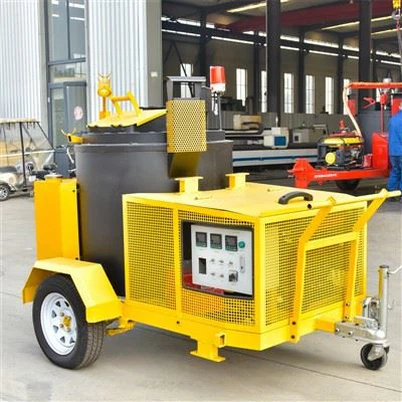
What are the lifting mechanisms in a road maintenance truck?
Leave a message

As a seasoned supplier of road maintenance trucks, I've witnessed firsthand the critical role these vehicles play in keeping our roads safe and functional. One of the most fascinating aspects of road maintenance trucks is their lifting mechanisms, which are essential for a variety of tasks, from lifting heavy equipment to accessing hard-to-reach areas. In this blog post, I'll delve into the different types of lifting mechanisms used in road maintenance trucks, their functions, and how they contribute to the overall efficiency of road maintenance operations.
Hydraulic Lifting Systems
Hydraulic lifting systems are perhaps the most common type of lifting mechanism found in road maintenance trucks. These systems use hydraulic fluid to generate force, which is then used to lift and lower heavy loads. The basic principle behind a hydraulic lifting system is Pascal's law, which states that pressure applied to a confined fluid is transmitted equally in all directions.
In a road maintenance truck, the hydraulic system typically consists of a hydraulic pump, cylinders, hoses, and valves. The pump is responsible for generating the hydraulic pressure, which is then sent through the hoses to the cylinders. The cylinders are the components that actually do the lifting, and they are connected to the load being lifted. By controlling the flow of hydraulic fluid to the cylinders, the operator can raise and lower the load with precision.
One of the main advantages of hydraulic lifting systems is their ability to generate a large amount of force with relatively little effort. This makes them ideal for lifting heavy equipment, such as asphalt pavers, road rollers, and snowplows. Additionally, hydraulic systems are highly reliable and can operate in a variety of environmental conditions, making them suitable for use in all types of road maintenance applications.
Pneumatic Lifting Systems
Pneumatic lifting systems, also known as air-powered lifting systems, use compressed air to generate force. These systems are similar to hydraulic systems in that they use a pump to generate pressure, but instead of hydraulic fluid, they use air.
In a pneumatic lifting system, the compressed air is stored in a tank and then released through a valve to the cylinders. The cylinders are connected to the load being lifted, and as the air enters the cylinders, it causes them to extend, lifting the load. By controlling the flow of air to the cylinders, the operator can raise and lower the load.
One of the main advantages of pneumatic lifting systems is their simplicity and ease of use. They are also relatively lightweight and can be easily installed on a road maintenance truck. Additionally, pneumatic systems are less prone to leaks and contamination than hydraulic systems, which makes them more reliable in certain applications.
However, pneumatic lifting systems have some limitations. They are generally not as powerful as hydraulic systems, which means they are not suitable for lifting extremely heavy loads. Additionally, they require a constant supply of compressed air, which can be a challenge in some remote locations.
Mechanical Lifting Systems
Mechanical lifting systems use mechanical components, such as gears, pulleys, and chains, to lift and lower loads. These systems are typically less complex than hydraulic and pneumatic systems, but they can still be very effective for certain applications.
One common type of mechanical lifting system used in road maintenance trucks is the winch. A winch consists of a drum that is wrapped with a cable or chain. The drum is powered by a motor, and as the drum rotates, it winds or unwinds the cable or chain, lifting or lowering the load.
Another type of mechanical lifting system is the scissor lift. A scissor lift consists of a series of linked bars that form a scissor-like structure. As the bars are extended or retracted, the platform on top of the scissor lift is raised or lowered. Scissor lifts are often used for accessing hard-to-reach areas, such as overhead power lines or traffic signals.
Mechanical lifting systems have some advantages over hydraulic and pneumatic systems. They are generally more affordable and easier to maintain. Additionally, they do not require a source of hydraulic fluid or compressed air, which makes them more suitable for use in remote locations.


However, mechanical lifting systems also have some limitations. They are generally not as powerful as hydraulic systems, and they can be slower to operate. Additionally, they are more prone to wear and tear than hydraulic and pneumatic systems, which means they may require more frequent maintenance.
Applications of Lifting Mechanisms in Road Maintenance Trucks
The lifting mechanisms in road maintenance trucks are used for a variety of applications, including:
- Equipment Loading and Unloading: Road maintenance trucks are often used to transport heavy equipment, such as asphalt pavers, road rollers, and snowplows. The lifting mechanisms on these trucks are used to load and unload the equipment safely and efficiently.
- Material Handling: Road maintenance trucks are also used to transport materials, such as asphalt, gravel, and salt. The lifting mechanisms on these trucks are used to lift and dump the materials into the appropriate locations.
- Accessing Hard-to-Reach Areas: Road maintenance trucks are often used to access hard-to-reach areas, such as overhead power lines, traffic signals, and bridges. The lifting mechanisms on these trucks are used to raise the operator or equipment to the appropriate height.
- Emergency Response: Road maintenance trucks are often used in emergency response situations, such as accidents and natural disasters. The lifting mechanisms on these trucks can be used to lift and move debris, rescue victims, and provide support to emergency responders.
Conclusion
In conclusion, the lifting mechanisms in road maintenance trucks are essential for a variety of tasks, from lifting heavy equipment to accessing hard-to-reach areas. There are several different types of lifting mechanisms available, each with its own advantages and limitations. Hydraulic lifting systems are the most common type of lifting mechanism used in road maintenance trucks, but pneumatic and mechanical systems are also used in certain applications.
As a supplier of road maintenance trucks, we understand the importance of providing our customers with high-quality lifting mechanisms that are reliable, efficient, and easy to use. We offer a wide range of road maintenance trucks, including Road Surface Maintenance Vehicle, Rural Road Maintenance Vehicle, and Road Cleaning Vehicle, all of which are equipped with the latest lifting technology.
If you're in the market for a road maintenance truck, or if you have any questions about our products or services, please don't hesitate to contact us. We'd be happy to discuss your needs and help you find the right solution for your road maintenance operations.
References
- Smith, J. (2020). Road Maintenance Equipment: A Comprehensive Guide. New York: McGraw-Hill.
- Johnson, R. (2019). Hydraulic Systems for Road Maintenance Trucks. London: Elsevier.
- Brown, S. (2018). Pneumatic Lifting Systems in Road Maintenance Applications. Berlin: Springer.