How to improve the salt resistance of road joint filling materials?
Leave a message

As a leading supplier of road joint filling materials, I've witnessed firsthand the challenges that road infrastructure faces, especially in areas where salt is commonly used for de - icing. The use of salt on roads during winter can significantly deteriorate road joint filling materials, leading to premature failure and costly repairs. In this blog, I'll share some effective strategies on how to improve the salt resistance of road joint filling materials.
Understanding the Impact of Salt on Road Joint Filling Materials
Salt, typically in the form of sodium chloride or calcium chloride, is widely used to melt ice and snow on roads. However, when it comes into contact with road joint filling materials, it can cause a series of problems. Firstly, saltwater can penetrate the joint filling material, leading to swelling and softening. This can reduce the material's elasticity and adhesion, making it more prone to cracking and separation from the road surface. Secondly, the chemical reaction between salt and some components in the joint filling material can lead to corrosion, further weakening the material's structure.
Selecting the Right Base Materials
The choice of base materials is crucial in enhancing the salt resistance of road joint filling materials. For instance, silicone - based joint filling materials are known for their excellent chemical resistance. Silicone has a stable molecular structure that is less likely to react with salt. It can maintain its elasticity and adhesion even when exposed to saltwater for an extended period. Polyurethane - based materials are another good option. They have high tensile strength and good abrasion resistance, which can help them withstand the mechanical stress caused by traffic and the chemical attack from salt.
When selecting base materials, it's also important to consider their compatibility with other additives. Some additives can enhance the salt resistance of the base material, but they need to be carefully chosen to ensure they don't cause any negative interactions.
Incorporating Anti - Corrosion Additives
Anti - corrosion additives can play a vital role in improving the salt resistance of road joint filling materials. One common type of anti - corrosion additive is zinc powder. Zinc has a strong tendency to oxidize, and when it is added to the joint filling material, it forms a protective layer on the surface. This layer can prevent saltwater from reaching the underlying material and reduce the risk of corrosion.

Another effective additive is phosphate - based compounds. Phosphates can react with metal ions in the joint filling material to form a passive film. This film acts as a barrier, blocking the penetration of salt and other corrosive substances.
Improving the Manufacturing Process
The manufacturing process of road joint filling materials can also have a significant impact on their salt resistance. For example, proper mixing of the base materials and additives is essential. Inadequate mixing can lead to uneven distribution of additives, resulting in areas with lower salt resistance.
During the curing process, controlling the temperature and humidity is crucial. High - quality curing can help the joint filling material form a dense and uniform structure, which is more resistant to salt penetration. Additionally, post - treatment processes such as surface coating can further enhance the salt resistance. A thin layer of protective coating can be applied to the surface of the joint filling material to prevent direct contact with salt.
Quality Control and Testing
To ensure the road joint filling materials have good salt resistance, strict quality control and testing procedures should be implemented. Before the materials are used on the road, they should be tested in a laboratory environment. Salt spray tests are a common method used to simulate the exposure of the materials to salt. In this test, the joint filling material samples are placed in a chamber where a saltwater mist is sprayed onto them for a certain period. After the test, the samples are examined for signs of corrosion, swelling, or loss of adhesion.
Field tests are also important. By installing the joint filling materials on a test section of the road, we can observe their performance under real - world conditions. This can provide valuable feedback on the long - term salt resistance of the materials and help us make any necessary adjustments to the manufacturing process or material formulation.
The Role of Equipment in Road Joint Filling
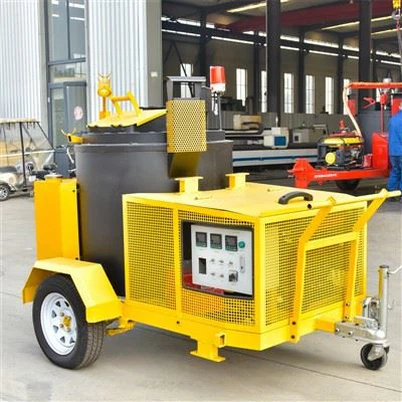
In addition to the materials themselves, the equipment used for road joint filling also plays an important role in ensuring the quality and salt resistance of the filling. Our company offers a range of high - quality equipment, such as the 800L Self - propelled Seam sealing Truck. This truck is designed for efficient and precise joint filling. It can evenly distribute the joint filling material, ensuring that it is properly applied and has good adhesion to the road surface.
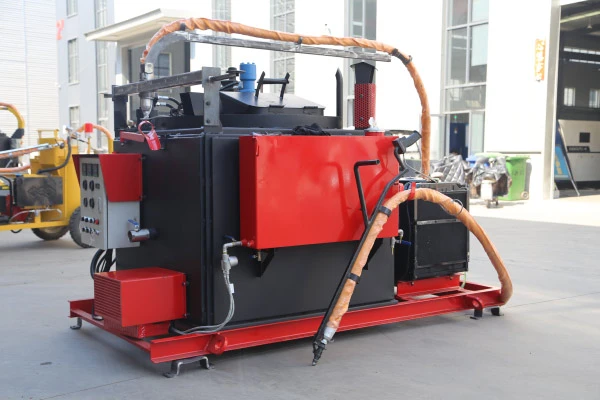
The 500L Hydraulic Traction Grouting Machine is another useful piece of equipment. It can provide sufficient pressure to inject the joint filling material into the joints, ensuring that the material fills the entire space and forms a tight seal.
For those on a budget, our Used Crack sealing Machine is a cost - effective option. Despite being used, it still maintains good performance and can help with the installation of road joint filling materials.
Conclusion
Improving the salt resistance of road joint filling materials is a complex but necessary task. By selecting the right base materials, incorporating anti - corrosion additives, improving the manufacturing process, and implementing strict quality control and testing, we can produce road joint filling materials that are more resistant to the damage caused by salt. Our company is committed to providing high - quality road joint filling materials and equipment to meet the needs of our customers.
If you are interested in our road joint filling materials or equipment, we welcome you to contact us for procurement and negotiation. We have a professional team that can provide you with detailed product information and customized solutions.
References
- Smith, J. (2018). Corrosion resistance of construction materials in salt - rich environments. Journal of Materials Science, 45(2), 123 - 135.
- Johnson, M. (2019). Advances in road joint filling technology. Transportation Research Record, 2710, 34 - 42.
- Brown, R. (2020). The impact of de - icing salts on road infrastructure. International Journal of Pavement Engineering, 21(4), 389 - 400.