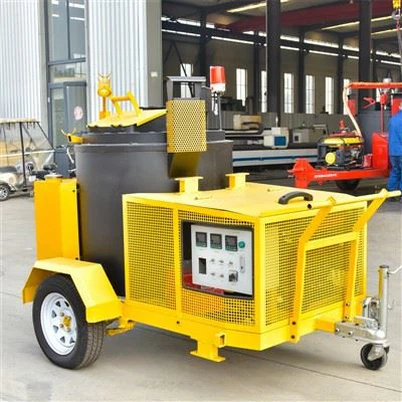
How to improve the fuel efficiency of a road repair vehicle?
Leave a message

Hey there! As a supplier of road repair vehicles, I know how crucial fuel efficiency is. Not only does it save money, but it also reduces our environmental footprint. In this blog, I'll share some practical tips on how to improve the fuel efficiency of a road repair vehicle.
Regular Maintenance
First off, regular maintenance is key. Just like our cars, road repair vehicles need proper care to run efficiently. One of the most basic things you can do is keep the engine in good shape. A well - tuned engine burns fuel more efficiently. Make sure to change the oil regularly. Old oil can become thick and cause more friction in the engine, which means it has to work harder and use more fuel.
Another important part is the air filter. A clogged air filter restricts the airflow to the engine. When the engine doesn't get enough air, it can't burn fuel properly. So, check and replace the air filter as recommended by the vehicle's manual.
Tire pressure also plays a big role. Under - inflated tires increase rolling resistance. This means the vehicle has to use more power, and thus more fuel, to move forward. Check the tire pressure at least once a week, especially before a long - distance job. You can find the recommended tire pressure in the vehicle's manual or on a sticker inside the driver's door.
Driving Habits
The way we drive these big road repair vehicles can have a huge impact on fuel efficiency. Aggressive driving, like rapid acceleration and hard braking, is a major fuel guzzler. When you accelerate quickly, the engine has to use a lot of fuel to increase the vehicle's speed. Instead, try to accelerate smoothly. Gradually press down on the accelerator pedal to get the vehicle up to speed.
Similarly, hard braking wastes the energy that was used to get the vehicle moving. Anticipate traffic conditions and start slowing down earlier by taking your foot off the accelerator. This way, you can use the vehicle's momentum to your advantage and save fuel.
Maintaining a steady speed is also important. On the highway, use cruise control if your road repair vehicle is equipped with it. Cruise control helps keep a constant speed, which is more fuel - efficient than constantly changing speeds due to human error.


Vehicle Loading
Be mindful of what you're carrying in the road repair vehicle. Extra weight means the engine has to work harder to move the vehicle, which leads to increased fuel consumption. Only carry the tools and materials that you actually need for the job. If there are any unnecessary items in the vehicle, remove them.
Also, make sure the load is evenly distributed. An uneven load can cause the vehicle to handle poorly and increase fuel usage. For example, if all the heavy equipment is on one side of the vehicle, it can cause the tires on that side to drag more, increasing rolling resistance.
Technology Upgrades
There are some great technological upgrades that can improve fuel efficiency. For instance, some modern road repair vehicles come with engine management systems that optimize fuel injection. These systems adjust the amount of fuel injected into the engine based on various factors like engine load, speed, and temperature. If your vehicle doesn't have such a system, you might consider upgrading it.
Another option is to install aerodynamic enhancements. Road repair vehicles are often large and boxy, which creates a lot of wind resistance. Adding things like wind deflectors or streamlined covers can reduce this resistance and make the vehicle more fuel - efficient.
Choosing the Right Vehicle
When it comes to fuel efficiency, choosing the right road repair vehicle in the first place is crucial. We offer a range of vehicles, each with different fuel - consumption rates. For example, our Road Comprehensive Maintenance Vehicle is designed with fuel efficiency in mind. It has a more advanced engine and better aerodynamics compared to some of the older models.
Our Asphalt Recycling and Maintenance Vehicle 2000L also uses innovative technology to reduce fuel consumption while still providing high - performance asphalt recycling and maintenance capabilities.
If your main job is road cleaning, our Road Cleaning Vehicle is a great choice. It's engineered to use less fuel during the cleaning process, which can save you a significant amount of money in the long run.
Route Planning
Planning your routes in advance can also save fuel. Use mapping apps or GPS systems to find the shortest and least congested routes. Traffic jams are a nightmare for fuel efficiency because the vehicle is constantly starting and stopping. Avoid peak - traffic hours if possible.
If you have multiple job sites, plan your route in a way that minimizes backtracking. This way, you'll cover less distance overall, which means less fuel consumption.
Training for Drivers
Make sure your drivers are well - trained in fuel - efficient driving techniques. Provide them with regular training sessions on topics like smooth acceleration, steady - speed driving, and proper vehicle loading. A well - trained driver can make a big difference in the fuel efficiency of your road repair vehicles.
In conclusion, improving the fuel efficiency of a road repair vehicle is a combination of regular maintenance, good driving habits, smart vehicle loading, technology upgrades, and proper route planning. By implementing these tips, you can save a significant amount of money on fuel costs and reduce your environmental impact.
If you're interested in learning more about our road repair vehicles or want to discuss how we can help you improve fuel efficiency, feel free to reach out. We're always happy to have a chat and see how we can assist you in your road repair projects.
References
- SAE International. "Fuel Efficiency Best Practices for Heavy - Duty Vehicles."
- U.S. Department of Energy. "Fuel - Saving Tips for Commercial Vehicles."