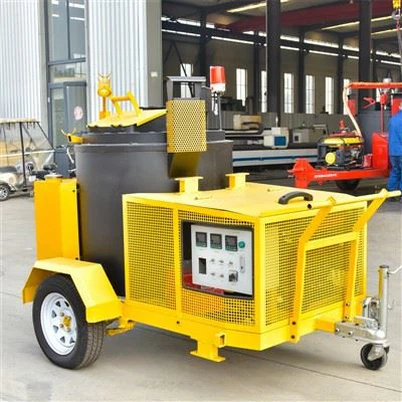
How to calculate the grout consumption of a Traction Grouting Machine?
Leave a message

Calculating the grout consumption of a Traction Grouting Machine is a crucial aspect for both contractors and suppliers in the construction and road repair industries. As a supplier of Traction Grouting Machines, I understand the importance of accurate grout consumption calculations to ensure cost - effectiveness, project efficiency, and high - quality results. In this blog, I will guide you through the process of calculating the grout consumption of a Traction Grouting Machine.
Understanding the Basics of Traction Grouting Machines
Traction Grouting Machines are essential equipment used for filling cracks, joints, and voids in various surfaces, such as roads, pavements, and building structures. They work by pumping grout materials into the targeted areas under pressure. The grout materials can be cement - based, epoxy - based, or other specialized mixtures, depending on the specific application requirements.
Factors Affecting Grout Consumption
Before we dive into the calculation methods, it's important to understand the factors that can influence the grout consumption of a Traction Grouting Machine:
1. Crack or Joint Dimensions
The width, depth, and length of the cracks or joints to be filled are the primary factors affecting grout consumption. Wider and deeper cracks will require more grout to fill compared to narrow and shallow ones. For example, a crack that is 10 mm wide and 50 mm deep will need significantly more grout than a crack that is 2 mm wide and 10 mm deep.
2. Porosity of the Surface
The porosity of the surface being grouted also plays a role. Porous surfaces can absorb some of the grout, increasing the overall consumption. For instance, a concrete surface with high porosity will absorb more grout than a smooth, non - porous asphalt surface.
3. Grout Properties
The properties of the grout, such as its viscosity and density, can affect how much grout is needed. Thicker, more viscous grouts may require more pressure to pump and may not flow as easily into small spaces, potentially increasing consumption.
4. Grouting Pressure
The pressure at which the grout is injected can impact consumption. Higher grouting pressures may force more grout into the cracks or joints, but it can also cause some grout to seep into surrounding areas, leading to additional consumption.
Calculation Methods
Method 1: Volume - Based Calculation
The most straightforward way to calculate grout consumption is by determining the volume of the cracks or joints to be filled. The formula for calculating the volume of a rectangular crack or joint is:
Volume (V) = Length (L) × Width (W) × Depth (D)
For example, if you have a crack that is 10 meters long, 5 mm wide (or 0.005 meters), and 20 mm deep (or 0.02 meters), the volume of the crack can be calculated as follows:
V = 10 m × 0.005 m × 0.02 m = 0.001 cubic meters
However, in real - world scenarios, cracks and joints may not have a perfect rectangular shape. In such cases, you can approximate the shape as a series of simple geometric shapes (e.g., rectangles, triangles) and calculate the volume of each shape separately, then sum them up.
It's important to note that this method assumes 100% filling efficiency. In practice, due to factors such as surface porosity and grout loss, you may need to add a safety factor. A common safety factor ranges from 10% to 30%, depending on the specific conditions of the project.
Method 2: Field Testing
Another way to estimate grout consumption is through field testing. Select a representative section of the area to be grouted and perform a test grouting operation. Measure the amount of grout used in the test section and then scale up the results based on the total area to be grouted.
For example, if you use 5 liters of grout to fill a 1 - square - meter test section, and the total area to be grouted is 100 square meters, you can estimate that you will need approximately 500 liters of grout (5 liters/m² × 100 m²).
Importance of Accurate Grout Consumption Calculation
Accurate grout consumption calculation offers several benefits:
Cost - Efficiency
By accurately calculating the amount of grout needed, you can avoid over - ordering or under - ordering grout materials. Over - ordering leads to unnecessary costs, while under - ordering can cause project delays and additional expenses for re - ordering.
Project Planning
Knowing the grout consumption in advance allows for better project planning. You can schedule the delivery of grout materials, allocate resources, and estimate the project timeline more accurately.
Quality Control
Accurate grout consumption ensures that the cracks and joints are filled properly, which is essential for the long - term durability and performance of the structure. Insufficient grout can lead to incomplete filling, while excessive grout can cause waste and may also affect the aesthetics of the surface.
Related Products
In addition to Traction Grouting Machines, we also offer a range of related products that can be used in road repair and construction projects. For example, our Electric Sealing Machine is designed for efficient sealing of road joints. It provides a reliable and cost - effective solution for preventing water infiltration and extending the lifespan of the road surface.


Our Asphalt Crack sealing Machine is specifically designed for filling asphalt cracks. It can handle different types of asphalt crack sealing materials and is suitable for both small - scale and large - scale projects.
For more comprehensive road repair solutions, our Asphalt Pavement Thermal Regeneration Repair Vehicle offers a state - of - the - art approach to asphalt pavement repair. It can heat, recycle, and repair damaged asphalt pavements on - site, reducing the need for new asphalt materials and minimizing environmental impact.
Conclusion
Calculating the grout consumption of a Traction Grouting Machine is a complex but essential task. By understanding the factors that affect grout consumption and using the appropriate calculation methods, you can ensure accurate estimates and optimize your project's cost, efficiency, and quality.
If you are interested in our Traction Grouting Machines or any of our other products, we invite you to contact us for more information and to discuss your specific project requirements. Our team of experts is ready to provide you with professional advice and support to help you achieve the best results in your construction and road repair projects.
References
- "Construction Materials: Properties, Specifications, and Selection" by David W. Fowler
- "Pavement Design and Management" by Y. Richard Kim and Rajib B. Mallick
- Industry standards and guidelines for grouting operations in construction and road repair.