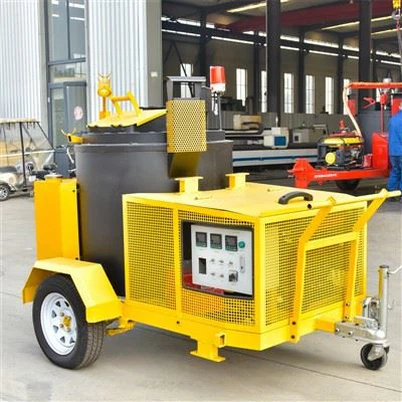
How does a road repair vehicle heat asphalt?
Leave a message

As a supplier of road repair vehicles, I often encounter questions from customers about how our vehicles heat asphalt. Asphalt heating is a crucial process in road repair, as it ensures that the asphalt is in a workable state for effective patching and resurfacing. In this blog post, I'll delve into the details of how our road repair vehicles heat asphalt, the technologies involved, and the benefits of our systems.
The Basics of Asphalt Heating
Before we dive into the heating process, it's important to understand why asphalt needs to be heated. Asphalt is a viscous material that becomes more fluid when heated. At ambient temperatures, asphalt is too stiff to be easily spread and compacted. By heating it, we lower its viscosity, allowing it to flow and conform to the shape of the road surface. This makes it easier to repair potholes, cracks, and other road defects.


Heating Methods in Our Road Repair Vehicles
Our road repair vehicles utilize a combination of advanced heating technologies to ensure efficient and uniform asphalt heating. Here are the primary methods we employ:
1. Direct Flame Heating
Direct flame heating is one of the most common methods used in our road repair vehicles. In this process, a burner system generates a high - intensity flame that is directed towards the asphalt. The flame transfers heat directly to the asphalt, raising its temperature rapidly.
The burner in our vehicles is carefully designed to control the intensity and direction of the flame. This allows us to heat the asphalt evenly, preventing over - heating in some areas and under - heating in others. The direct flame heating system is highly effective for quickly bringing the asphalt to the desired working temperature, typically between 120°C and 160°C.
2. Indirect Heating
In addition to direct flame heating, our road repair vehicles also use indirect heating methods. Indirect heating involves using a heat exchanger to transfer heat from a hot fluid (usually a thermal oil) to the asphalt. The thermal oil is heated by a burner and then circulated through a series of pipes that are in contact with the asphalt.
This method has several advantages. Firstly, it provides a more gentle and uniform heating process. Since the heat is transferred through the pipes, there is less risk of localized over - heating, which can damage the asphalt. Secondly, indirect heating allows for better temperature control. We can adjust the flow rate and temperature of the thermal oil to precisely regulate the amount of heat transferred to the asphalt.
3. Electric Heating
Some of our more advanced road repair vehicles are equipped with electric heating elements. Electric heating is a clean and efficient way to heat asphalt. The electric elements are embedded in the asphalt storage tank or the heating chamber. When an electric current passes through the elements, they generate heat, which is then transferred to the asphalt.
Electric heating offers precise temperature control and is particularly suitable for smaller - scale road repair operations or in areas where emissions are a concern. It also has the advantage of being easy to operate and maintain, as there are no burners or fuel systems to manage.
The Heating Process Step - by - Step
Let's take a closer look at how the heating process works in our road repair vehicles:
- Loading the Asphalt: The first step is to load the cold asphalt into the storage tank or heating chamber of the road repair vehicle. The vehicle is designed to handle different types of asphalt, including hot - mix asphalt and recycled asphalt.
- Initial Heating: Once the asphalt is loaded, the heating system is activated. Depending on the vehicle's configuration, either the direct flame burner, the indirect heating system, or the electric heating elements start to heat the asphalt.
- Temperature Monitoring: Throughout the heating process, the temperature of the asphalt is continuously monitored using temperature sensors. These sensors send real - time data to a control panel, allowing the operator to adjust the heating settings as needed.
- Achieving the Working Temperature: The goal is to heat the asphalt to the optimal working temperature. Once the desired temperature is reached, the heating system can be adjusted to maintain the temperature until the asphalt is ready to be used for road repair.
- Transfer and Application: When it's time to repair the road, the heated asphalt is transferred from the storage tank to the application area using a conveyor system or a pumping mechanism. The fluid asphalt can then be spread and compacted to repair the road surface.
Benefits of Our Asphalt Heating Systems
Our road repair vehicles' asphalt heating systems offer several benefits to our customers:
- Efficiency: Our heating systems are designed to heat asphalt quickly and efficiently, reducing downtime between repairs. This allows road repair crews to complete more jobs in a shorter period of time.
- Quality of Repairs: By ensuring that the asphalt is heated to the correct temperature and evenly distributed, our systems contribute to high - quality road repairs. The well - heated asphalt adheres better to the road surface, providing a more durable and long - lasting repair.
- Versatility: Our vehicles can heat different types of asphalt, including recycled asphalt. This not only helps in reducing waste but also provides a cost - effective solution for road repair projects.
- Ease of Use: The heating systems in our road repair vehicles are user - friendly, with intuitive control panels that allow operators to easily adjust the heating settings. This means that even less - experienced operators can operate the vehicles effectively.
Related Road Maintenance Vehicles
If you are interested in other types of road maintenance vehicles, we also offer a range of products. Check out our Multi Functional Ground Maintenance Vehicle, which is capable of performing multiple tasks such as grass cutting, snow removal, and debris collection. Our Road Clearing Vehicle is designed to quickly clear roads of obstacles and debris, ensuring smooth traffic flow. And for surface - level road maintenance, our Road Surface Maintenance Vehicle is an ideal choice.
Conclusion
As a leading supplier of road repair vehicles, we are committed to providing our customers with high - quality vehicles that feature advanced asphalt heating technologies. Our heating systems are designed to be efficient, reliable, and easy to use, ensuring that road repair crews can carry out their work effectively. If you are in the market for a road repair vehicle or have any questions about our asphalt heating systems, we encourage you to get in touch with us for a detailed discussion and to start the procurement process. We look forward to serving you and helping you achieve your road maintenance goals.
References
- "Asphalt Paving Handbook", Asphalt Institute
- "Road Maintenance and Rehabilitation Technologies", Transportation Research Board