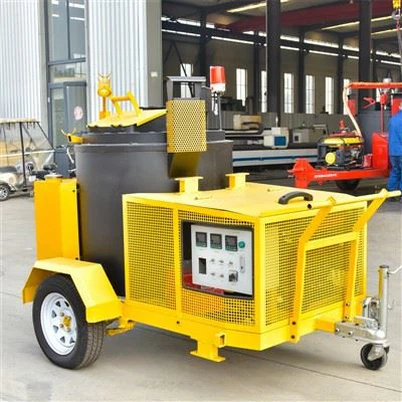
How does a road maintenance vehicle repair potholes?
Leave a message

Hey there! I'm really excited to share with you all about how a road maintenance vehicle repairs potholes. As a supplier of road maintenance vehicles, I've seen firsthand how these amazing machines work their magic on the roads.
First off, let's talk about what potholes are and why they're such a big problem. Potholes are basically holes in the road surface that form when water seeps into the cracks in the asphalt or concrete. When the water freezes and thaws, it expands and contracts, causing the pavement to break apart. Over time, traffic and weather conditions can make these holes bigger and deeper, posing a danger to drivers, cyclists, and pedestrians.
So, how does a road maintenance vehicle step in to fix these pesky potholes? Well, it all starts with the preparation. Before the actual repair work begins, the road maintenance crew needs to assess the size and depth of the pothole. They'll use specialized equipment like lasers or cameras to measure the dimensions accurately. This information helps them determine the amount of materials needed for the repair.
Once the assessment is done, it's time to get the pothole ready for repair. The first step is to clean the pothole. The road maintenance vehicle is equipped with powerful vacuum systems or blowers that suck up all the loose debris, dirt, and water from the hole. This ensures that the new material will adhere properly to the existing pavement.
Next, the crew will apply a layer of tack coat. This is a sticky liquid that helps the new asphalt or concrete bond to the old surface. The tack coat is usually sprayed onto the pothole using a spray bar attached to the road maintenance vehicle. It's important to apply the tack coat evenly to ensure a strong bond.
Now comes the fun part - filling the pothole! The road maintenance vehicle is loaded with hot mix asphalt or precast concrete, depending on the type of repair needed. For smaller potholes, hot mix asphalt is often the preferred choice. It's a mixture of aggregate, asphalt cement, and additives that is heated to a high temperature to make it workable.
The asphalt is transferred from the storage tank on the road maintenance vehicle to the pothole using a conveyor belt or a chute. The crew will carefully pour the asphalt into the pothole, making sure to fill it to the proper level. They'll use a screed or a rake to smooth out the surface and ensure a uniform finish.
For larger potholes or more severe damage, precast concrete may be used. Precast concrete is a pre - made block that is specifically designed for road repairs. The road maintenance vehicle can transport and place these blocks into the pothole with precision. Once the block is in place, it is secured and grouted to ensure a stable and long - lasting repair.
After the pothole is filled, the next step is to compact the material. Compaction is crucial because it helps to increase the density of the asphalt or concrete, making it more resistant to traffic and weather. The road maintenance vehicle is equipped with a compactor, which can be a vibratory roller or a plate compactor. The compactor is driven over the filled pothole multiple times to compress the material and remove any air pockets.


Finally, the crew will perform a final inspection of the repaired pothole. They'll check for any unevenness, cracks, or other defects. If everything looks good, the road is ready to be reopened to traffic.
Now, let me tell you a bit about the different types of road maintenance vehicles we offer. We have the Road Repair Vehicle, which is a versatile machine that can handle a wide range of road repair tasks, including pothole filling. It's compact and easy to maneuver, making it ideal for urban areas and small - scale repairs.
Our Motorway Maintenance Vehicles are designed for large - scale road maintenance on highways and motorways. These vehicles are equipped with advanced technology and high - capacity storage tanks to handle big potholes and long stretches of road.
And then there's our Road Maintenance Truck, which is a workhorse on the roads. It combines the functionality of a truck with the specialized equipment needed for road repair. It can carry a large amount of materials and has all the tools necessary for efficient pothole repair.
If you're in the market for a road maintenance vehicle, whether it's for a municipality, a construction company, or a private contractor, we've got you covered. Our vehicles are built to last, with high - quality components and reliable performance. They're also designed with the latest safety features to protect the crew and the public.
We understand that every road maintenance project is unique, and we're committed to providing customized solutions to meet your specific needs. Whether you need a small, single - function road maintenance vehicle or a large, multi - purpose machine, we can help you find the right one.
So, if you're interested in learning more about our road maintenance vehicles or would like to discuss a potential purchase, don't hesitate to reach out. We're here to answer all your questions and guide you through the purchasing process. Let's work together to keep our roads safe and smooth!
References
- "Pavement Preservation: A Guide to Pothole Repair." Federal Highway Administration.
- "Road Maintenance and Rehabilitation Best Practices." American Association of State Highway and Transportation Officials.