How do highway maintenance lorries deal with potholes?
Leave a message

Potholes are a persistent nuisance on our roads, posing risks to drivers, cyclists, and pedestrians alike. As a highway maintenance lorry supplier, I've witnessed firsthand the challenges and innovative solutions in dealing with these road imperfections. In this blog, I'll delve into how highway maintenance lorries tackle potholes, from detection to repair, and the role of our specialized vehicles in the process.
Pothole Detection
The first step in dealing with potholes is to identify their location. Highway maintenance lorries are equipped with various technologies to detect potholes accurately. One common method is the use of advanced imaging systems, such as LiDAR (Light Detection and Ranging) and high - resolution cameras. These systems can scan the road surface while the lorry is in motion, creating detailed maps of the road conditions.


LiDAR technology emits laser pulses that bounce off the road surface and return to the sensor. By analyzing the time it takes for the laser pulses to return, the system can measure the distance between the sensor and the road, creating a 3D map of the surface. This allows maintenance crews to identify potholes, cracks, and other road defects with high precision.
High - resolution cameras can also capture detailed images of the road. Computer vision algorithms can then analyze these images to detect potholes based on their shape, size, and color. This approach is particularly useful for detecting smaller potholes that may be missed by other methods.
Once the potholes are detected, the information is sent to a central database. Maintenance crews can access this data to plan their repair operations efficiently. They can prioritize potholes based on their severity, location (e.g., near schools or busy intersections), and the potential impact on traffic.
Pothole Repair
After detecting the potholes, the next step is to repair them. Highway maintenance lorries are designed to carry out a variety of repair methods, depending on the size and condition of the pothole.
Temporary Repairs
For immediate relief and to prevent further damage, temporary repairs are often carried out. Temporary patching materials, such as cold - mix asphalt, can be quickly applied to the pothole. Highway maintenance lorries are equipped with storage compartments for these patching materials.
The process typically involves cleaning the pothole of any debris, water, or loose asphalt using a high - pressure air or water jet system on the lorry. Once the pothole is clean, the cold - mix asphalt is poured into the pothole and compacted using a compaction device on the lorry, such as a vibrating plate compactor. This provides a quick fix that can last for several months, especially in less - trafficked areas.
Permanent Repairs
Permanent repairs are more time - consuming but offer a long - lasting solution. For larger or more severe potholes, the damaged asphalt is removed using milling machines attached to the highway maintenance lorries. The milling process creates a clean, even surface, allowing for better adhesion of the new asphalt.
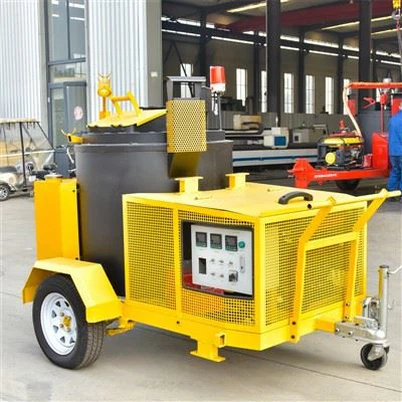
After milling, a layer of tack coat, a thin layer of asphalt emulsion, is applied to the prepared surface. This helps the new asphalt bond to the existing road. Then, hot - mix asphalt is poured into the area and compacted using heavy - duty compaction equipment. The Asphalt Curing Vehicle 800L plays a crucial role in this process. It can heat and transport the hot - mix asphalt to the repair site, ensuring that the asphalt is at the optimal temperature for proper installation and curing.
Post - Repair Inspection and Maintenance
Once the pothole is repaired, it's essential to conduct a post - repair inspection. Highway maintenance lorries can be equipped with inspection tools to check the quality of the repair. This includes measuring the smoothness of the repaired surface, checking for proper compaction, and ensuring that the new asphalt has adhered correctly to the existing road.
Regular post - repair maintenance is also necessary to extend the lifespan of the repair. Our Road Comprehensive Maintenance Vehicle can be used for this purpose. It is capable of performing a range of tasks, such as crack sealing, surface rejuvenation, and line painting. These maintenance tasks help protect the repaired area from future damage, such as water infiltration and traffic wear.
The Role of Cleaning in Pothole Maintenance
Cleaning the road surface around the pothole is an often - overlooked but crucial part of the maintenance process. Debris, dirt, and water can accumulate in potholes, exacerbating the problem and making repairs less effective. Our Small Cleaning Vehicle is designed to clean the road surface efficiently. It can remove leaves, gravel, and other debris, as well as dry up standing water, creating a clean and dry surface for pothole repairs.
Conclusion
Highway maintenance lorries play a vital role in ensuring the safety and smoothness of our roads by effectively dealing with potholes. From advanced detection technologies to a wide range of repair and maintenance capabilities, these vehicles are essential for keeping our road infrastructure in good condition.
As a highway maintenance lorry supplier, we are committed to providing high - quality vehicles and solutions that meet the diverse needs of our customers. Whether you are a local government agency responsible for maintaining city roads or a private contractor working on highway projects, our vehicles can help you tackle potholes efficiently and effectively.
If you are interested in learning more about our highway maintenance lorries or would like to discuss your specific requirements, we invite you to contact us for a procurement consultation. Our team of experts is ready to assist you in finding the best solutions for your road maintenance needs.
References
- "Pothole Prevention and Repair: Best Practices for Local Governments." American Public Works Association.
- "Advanced Road Surface Detection Technologies." Journal of Transportation Research.
- "Guidelines for Asphalt Road Repair and Maintenance." International Association of Asphalt Paving Technologists.