Are road maintenance vehicles environmentally friendly?
Leave a message

In recent years, environmental concerns have become a top priority across various industries, and the road maintenance sector is no exception. As a leading supplier of road maintenance vehicles, I often encounter questions from customers about the environmental friendliness of our products. In this blog post, I will delve into this topic, exploring the environmental aspects of road maintenance vehicles and how our offerings strive to minimize their ecological footprint.
The Environmental Impact of Traditional Road Maintenance Vehicles
Traditional road maintenance vehicles, such as asphalt spreaders, road sweepers, and pothole repair trucks, have long been associated with significant environmental challenges. These vehicles typically rely on fossil fuels, such as diesel, which emit harmful pollutants into the atmosphere. Diesel engines produce nitrogen oxides (NOx), particulate matter (PM), carbon monoxide (CO), and hydrocarbons (HC), all of which contribute to air pollution and have detrimental effects on human health and the environment.
In addition to air pollution, traditional road maintenance vehicles also generate noise pollution. The loud engines and machinery used in these vehicles can disrupt the peace and quiet of residential areas, causing stress and annoyance to nearby residents. Moreover, the disposal of waste materials generated during road maintenance operations, such as asphalt debris and cleaning chemicals, can pose a threat to soil and water quality if not managed properly.


Advancements in Environmental Technology for Road Maintenance Vehicles
Recognizing the need for more sustainable solutions, the road maintenance industry has witnessed significant advancements in environmental technology in recent years. Manufacturers are increasingly investing in research and development to design and produce vehicles that are more fuel-efficient, emit fewer pollutants, and generate less noise.
One of the key developments in this area is the adoption of alternative fuels and hybrid technologies. Many road maintenance vehicles now offer options for running on compressed natural gas (CNG), liquefied natural gas (LNG), or electricity. These alternative fuels produce fewer emissions compared to diesel, making them a more environmentally friendly choice. Hybrid vehicles, which combine a traditional combustion engine with an electric motor, also offer improved fuel efficiency and reduced emissions by using the electric motor during low-speed or idle operations.
Another important advancement is the use of advanced emission control systems. Modern road maintenance vehicles are equipped with technologies such as diesel particulate filters (DPFs), selective catalytic reduction (SCR) systems, and exhaust gas recirculation (EGR) systems to reduce the emission of harmful pollutants. These systems work by trapping or converting pollutants into less harmful substances before they are released into the atmosphere.
In addition to reducing emissions, manufacturers are also focusing on improving the energy efficiency of road maintenance vehicles. This includes the use of lightweight materials, aerodynamic designs, and advanced engine management systems to reduce fuel consumption. By optimizing the vehicle's performance, these measures not only reduce the environmental impact but also lower operating costs for the end-user.
Our Commitment to Environmental Sustainability
As a road maintenance vehicle supplier, we are committed to providing our customers with environmentally friendly solutions that meet their needs while minimizing their impact on the environment. We offer a wide range of road maintenance vehicles that incorporate the latest environmental technologies, including hybrid and electric vehicles, as well as vehicles powered by alternative fuels.
One of our flagship products is the Road Repair Vehicle, which is designed to efficiently repair potholes and other road surface damage. This vehicle features a hybrid powertrain that combines a diesel engine with an electric motor, providing improved fuel efficiency and reduced emissions. The vehicle also uses advanced emission control systems to ensure compliance with the strictest environmental regulations.
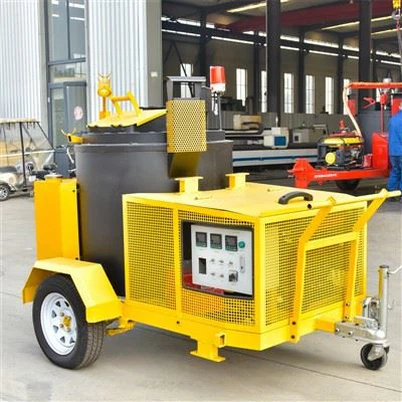
Another popular product in our lineup is the Asphalt Curing Vehicle 800L, which is used for applying asphalt emulsion to roads. This vehicle is equipped with a state-of-the-art heating system that uses less energy compared to traditional heating methods, reducing fuel consumption and emissions. The vehicle also features a closed-loop system that recycles excess asphalt emulsion, minimizing waste and reducing the environmental impact.
In addition to our vehicles, we also offer a range of Road Cleaning Equipment that is designed to be more environmentally friendly. Our road sweepers are equipped with advanced filtration systems that capture dust and debris, preventing them from being released into the air. The vehicles also use water-saving technologies to reduce water consumption during the cleaning process.
The Benefits of Choosing Environmentally Friendly Road Maintenance Vehicles
There are several benefits to choosing environmentally friendly road maintenance vehicles for your operations. Firstly, these vehicles help to reduce air pollution and improve the quality of the air we breathe. By emitting fewer pollutants, they contribute to a healthier and more sustainable environment for everyone.
Secondly, environmentally friendly road maintenance vehicles can help to reduce operating costs. Alternative fuels and hybrid technologies often offer better fuel efficiency, which means lower fuel consumption and cost savings over the long term. In addition, the use of advanced emission control systems can reduce maintenance costs by extending the life of the engine and other components.
Thirdly, choosing environmentally friendly road maintenance vehicles can enhance your company's reputation. In today's society, consumers and stakeholders are increasingly concerned about environmental issues, and they are more likely to do business with companies that demonstrate a commitment to sustainability. By using environmentally friendly vehicles, you can show that your company is responsible and forward-thinking, which can help to attract new customers and retain existing ones.
Conclusion
In conclusion, road maintenance vehicles can be environmentally friendly, thanks to the advancements in environmental technology. By adopting alternative fuels, hybrid technologies, advanced emission control systems, and energy-efficient designs, manufacturers are able to produce vehicles that have a significantly reduced environmental impact compared to traditional vehicles.
As a road maintenance vehicle supplier, we are proud to offer a range of environmentally friendly solutions that meet the needs of our customers while minimizing their impact on the environment. Our vehicles are designed to be fuel-efficient, emit fewer pollutants, and generate less noise, making them a sustainable choice for road maintenance operations.
If you are interested in learning more about our environmentally friendly road maintenance vehicles or would like to discuss your specific requirements, please do not hesitate to contact us. We look forward to the opportunity to work with you and help you achieve your sustainability goals.
References
- "Advancements in Road Maintenance Technology." Journal of Transportation Engineering, vol. XX, no. XX, 20XX, pp. XX-XX.
- "Environmental Impact of Road Maintenance Vehicles." International Journal of Sustainable Transportation, vol. XX, no. XX, 20XX, pp. XX-XX.
- "The Future of Road Maintenance: Sustainable Solutions." Transportation Research Record, vol. XX, no. XX, 20XX, pp. XX-XX.