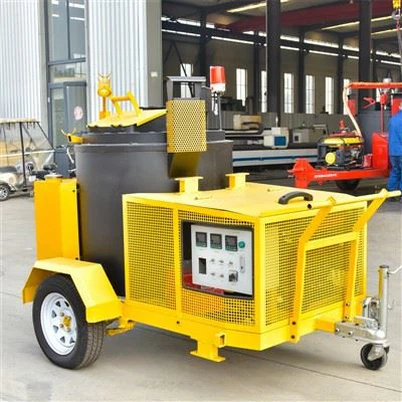
Safety Precautions For Road Maintenance Vehicle Operations
Leave a message
With the continuous improvement of transportation infrastructure, the frequency and scope of road maintenance operations are constantly expanding. As core equipment in these operations, the safety of road maintenance vehicles directly affects the lives of maintenance personnel, the traffic order of passing vehicles, and road efficiency. Recently, the transportation department, based on recent typical cases, has compiled and released four core safety precautions for road maintenance vehicle operations, providing authoritative guidance for safe operations in the industry.
Preparation Before Operations
Before operating a road maintenance vehicle, three key preparations must be completed. First, a vehicle inspection is necessary, including a comprehensive check of the lighting system (including warning lights and outline lights), braking devices, and operating equipment (such as sweeping brushes and spraying systems) to ensure they are functioning without malfunctions. Second, safety equipment configuration is crucial; reflective cones, warning signs, crash barriers, and nighttime lighting equipment must be carried, and reflective equipment must meet national standards. Finally, a site survey is essential, requiring advance understanding of traffic flow, speed limits, and the surrounding environment of the work section, developing a traffic management plan, and, if necessary, collaborating with traffic police to close some lanes. Meanwhile, all personnel must complete pre-job training, clearly understand the work procedures, safety responsibilities, and emergency response plans, and are strictly prohibited from working without a license or while fatigued.
Work Procedures
During the work process, the principle of "safety first, orderly operation" must be strictly followed. First, warning signs must be set up: the work vehicle must have its hazard lights and side marker lights on, and reflective cones and warning signs must be placed at a specified distance (no less than 50 meters on urban roads and no less than 150 meters on highways) in the direction of oncoming traffic. Flashing lights must be added at night. Second, lane occupancy must be standardized: lanes must be occupied reasonably according to work needs, avoiding arbitrary lane changes and driving against traffic. A safe distance must be maintained between work vehicles, and parallel operations that obstruct traffic are strictly prohibited. Third, personnel operation requirements: workers must wear reflective vests, are strictly prohibited from walking freely outside the work vehicle, must ensure safety before crossing lanes, and must wear safety belts and take fall prevention measures when working at heights (such as bridge maintenance). In addition, it is necessary to monitor weather and road conditions in real time. In case of severe weather such as heavy rain, fog, snow, or sudden traffic congestion or accidents, operations must be immediately suspended, and personnel evacuated to a safe area and the relevant departments notified.
Equipment and Personnel Management
Road maintenance vehicles must be subject to a regular maintenance system, with comprehensive inspections conducted monthly and performance tests performed quarterly. Aging parts must be replaced promptly to ensure vehicles are in good condition. Operating equipment must meet industry standards; the use of modified or scrapped equipment is strictly prohibited.
Regarding personnel management, regular safety training and emergency drills must be conducted to improve the risk awareness and emergency response capabilities of operators. Health records must be established for operators, and working under the influence of alcohol or while ill is strictly prohibited. Job responsibilities must be clearly defined, with designated personnel assigned to specific positions to avoid violations.
Emergency Response
In the event of a traffic accident or equipment malfunction during operations, the emergency plan must be activated immediately. First, protect the scene, activate all warning devices, and expand the warning area to prevent secondary accidents. Second, evacuate personnel, organizing workers and passengers of passing vehicles to move to a safe area. Third, report to rescue authorities, immediately contacting traffic police, road administration, and maintenance departments, explaining the accident location and situation, and cooperating in rescue and traffic control. Fourth, handle the situation on-site; minor faults that can be repaired independently should be done under safe conditions, while complex faults should be handled by professionals; blind repairs are strictly prohibited.
Road maintenance vehicle operation safety involves the interests of multiple parties. Maintenance units must fulfill their primary responsibility and strictly implement safety regulations; workers must strictly adhere to operating procedures; and passing vehicles must proactively avoid the work area and slow down. Only through multi-party collaboration can a solid safety line be built for road maintenance operations, ensuring smooth road traffic and personnel safety.