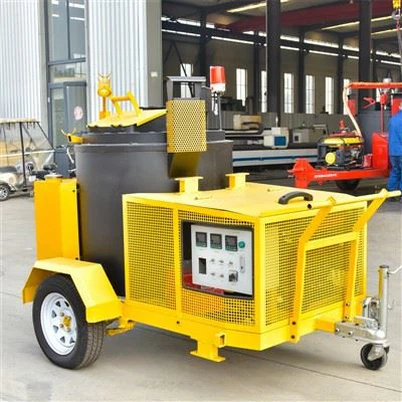
EU Tightens Emission Rules For Construction Grouting Equipment
Leave a message
Sweeping Changes Coming to Industry Standards
The European Commission has unveiled stringent new emissions requirements for traction grouting machinery that will fundamentally alter equipment specifications across the construction sector. Effective January 2026, these regulations mandate substantial reductions in harmful exhaust outputs from diesel-powered grouting systems used in foundation work and tunneling operations.
Breaking Down the New Compliance Framework
The updated directive (EU 2024/Construction Emissions) establishes three critical benchmarks:
1. Exhaust Emission Thresholds
● Nitrogen oxides (NOx) limited to 0.4 g/kWh (35% reduction from current standards)
● Particulate matter (PM) capped at 0.015 g/kWh
● Hydrocarbon emissions cannot exceed 0.19 g/kWh
2. Operational Monitoring Requirements
● Onboard emissions tracking systems mandatory for all units above 56kW
● Annual performance verification through accredited testing facilities
3. Phase-Out Schedule
● New equipment must comply by Q1 2026
● Existing fleets granted 36-month transition period with progressive restrictions
Industry Impact Analysis
Equipment manufacturers face significant redesign challenges, particularly regarding:
● Aftertreatment Systems: Most current diesel models will require upgraded selective catalytic reduction (SCR) units and diesel particulate filters (DPFs)
● Powerplant Alternatives: Several European manufacturers are accelerating development of battery-electric prototypes, though energy density limitations persist for continuous operation
● Cost Implications: Preliminary estimates suggest 12-18% price increases for compliant diesel models
Construction firms should prepare for:
● Project Budget Adjustments: Equipment rental rates expected to rise 15-20%
● Fleet Modernization: Many contractors planning accelerated replacement cycles
● Operational Changes: Potential need for emission-controlled work zones on urban sites
Technological Pathways Forward
Leading engineering solutions emerging include:
1. Hybrid-Electric Systems
● Combining reduced-displacement diesel engines with battery assistance
● Volvo CE's prototype showing 40% emission reductions in field tests
2. Hydrogen Combustion Options
● JCB and Liebherr developing dual-fuel hydrogen/diesel models
● Infrastructure challenges remain for widespread adoption
3. Advanced Aftertreatment
● Next-generation SCR systems with improved cold-start performance
● Particulate filters with automated regeneration cycles
Compliance Timelines and Enforcement
The implementation schedule progresses through three phases:
● 2024-2025: Certification protocols established
● 2026: Full compliance required for new equipment
● 2027-2029: Gradual restrictions on non-compliant existing units
National authorities will conduct random site inspections with penalties including:
● €15,000-50,000 fines for non-compliant equipment operation
● Project shutdown orders for repeat violations
● Blacklisting from public tenders for severe infractions
Market Response and Adaptation Strategies
Forward-thinking companies are pursuing multiple adaptation pathways:
Equipment Manufacturers
● Bosch and Cummins collaborating on modular emission systems
● Hyundai Construction Equipment investing €200M in electric R&D
● Small manufacturers forming technology-sharing consortia
Construction Firms
● Major contractors establishing green equipment quotas (30% by 2026)
● Regional equipment sharing pools to spread compliance costs
● Increased leasing rather than purchasing to maintain flexibility


Looking Ahead: The Future of Clean Construction
These regulations signal a fundamental shift in EU construction policy, with broader implications:
● Likely expansion to other equipment categories (excavators, loaders)
● Potential synchronization with US EPA and Asian standards
● Emerging opportunities in retrofitting and conversion services
While the transition presents challenges, it also drives innovation that may ultimately reduce operating costs through improved fuel efficiency and maintenance requirements.