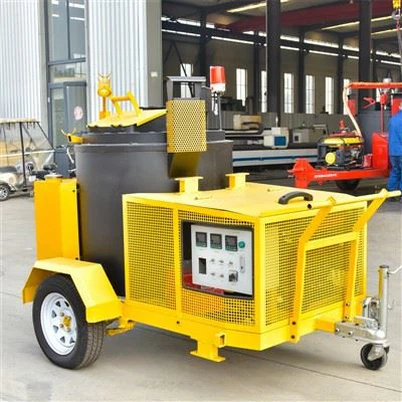
What are the lighting requirements for a road repair vehicle at night?
Leave a message

Hey there! As a supplier of Road Repair Vehicles, I often get asked about the lighting requirements for these vehicles when they're out doing their thing at night. It's a super important topic because proper lighting not only keeps the workers safe but also ensures that the road repair job gets done efficiently. So, let's dive right into it.
Why Good Lighting Matters
First off, why is lighting such a big deal for road repair vehicles at night? Well, think about it. Road repair work is often complex and requires precision. Workers need to see what they're doing clearly, whether it's patching up a pothole, laying new asphalt, or fixing a curb. Without adequate lighting, they could make mistakes that might compromise the quality of the repair.
Moreover, safety is a top priority. Other road users, like cars, trucks, and motorcycles, need to be able to spot the road repair vehicle from a distance. This helps them adjust their speed and course to avoid any accidents. Poor lighting can lead to collisions, which are not only dangerous but can also cause significant delays in the repair work.
Types of Lighting for Road Repair Vehicles
There are several types of lighting that a road repair vehicle should have. Let's break them down:


Headlights
Just like in regular cars, headlights are essential for road repair vehicles. They provide the main source of forward illumination, allowing the driver to see the road ahead. However, the headlights on a road repair vehicle need to be more powerful than those on a regular car. This is because they often need to light up a larger area, especially when the vehicle is stationary and workers are moving around in front of it.
Work Lights
Work lights are specifically designed to illuminate the work area. They're usually mounted on the sides or the back of the vehicle, pointing down towards the ground. These lights are crucial for workers to see the details of the repair job, such as cracks in the road or the edges of a pothole. Work lights should be bright and have a wide beam pattern to cover as much of the work area as possible.
Warning Lights
Warning lights are used to alert other road users that there's a road repair vehicle ahead. They're typically flashing lights in bright colors, such as red, amber, or blue. Warning lights can be mounted on the top of the vehicle, on the sides, or at the rear. They should be visible from a long distance, even in low-light conditions. Some road repair vehicles also have strobe lights, which are extremely bright and can be seen from far away.
Tail Lights
Tail lights are important for indicating the position and movement of the road repair vehicle to other drivers. They should be bright and clearly visible, especially when the vehicle is braking or reversing. Tail lights also help other drivers judge the distance between their vehicle and the road repair vehicle.
Lighting Requirements by Law
In many countries, there are specific laws and regulations regarding the lighting requirements for road repair vehicles. These laws are in place to ensure the safety of both the workers and other road users. For example, in the United States, the Federal Motor Carrier Safety Administration (FMCSA) has regulations that specify the minimum requirements for lighting on commercial vehicles, including road repair vehicles.
Some of the common requirements include:
- The headlights must be in good working condition and have the proper alignment.
- The work lights must provide adequate illumination of the work area.
- The warning lights must be visible from a certain distance and must flash at a specific frequency.
- The tail lights must be bright and clearly visible.
It's important for road repair vehicle suppliers to make sure that their vehicles meet these legal requirements. This not only keeps the customers compliant with the law but also helps to build trust and credibility in the market.
Lighting Standards and Certifications
In addition to legal requirements, there are also industry standards and certifications for lighting on road repair vehicles. These standards are developed by organizations such as the Society of Automotive Engineers (SAE) and the International Organization for Standardization (ISO).
Vehicles that meet these standards and certifications are considered to be of higher quality and safety. For example, a road repair vehicle with SAE-certified headlights is more likely to provide reliable and effective illumination than one without the certification. As a supplier, we always strive to provide vehicles that meet or exceed these industry standards.
Lighting and Energy Efficiency
In today's world, energy efficiency is becoming increasingly important. Road repair vehicles are no exception. Using energy-efficient lighting can not only reduce the operating costs of the vehicle but also have a positive impact on the environment.
LED lights are a great option for road repair vehicles. They're more energy-efficient than traditional incandescent or halogen lights, which means they use less power and last longer. LED lights also produce less heat, which can be beneficial in a work environment where workers are already exposed to high temperatures.
Choosing the Right Lighting for Your Road Repair Vehicle
When choosing a road repair vehicle, it's important to consider the lighting options. Here are some tips:
- Look for a vehicle with powerful headlights that can provide adequate forward illumination.
- Make sure the work lights are bright and cover a wide area.
- Check that the warning lights are visible from a long distance and meet the legal requirements.
- Consider the energy efficiency of the lighting system. LED lights are a good choice.
At our company, we offer a range of road repair vehicles with different lighting options. Whether you need a Rural Road Maintenance Vehicle, a New Energy Road Maintenance Vehicle, or a Multi Functional Ground Maintenance Vehicle, we can help you find the right vehicle with the right lighting for your needs.
Contact Us for Your Road Repair Vehicle Needs
If you're in the market for a road repair vehicle, don't hesitate to contact us. We have a team of experts who can help you choose the right vehicle and lighting options for your specific requirements. We also offer competitive prices and excellent customer service. So, whether you're a small road repair contractor or a large government agency, we can provide you with the solutions you need.
References
- Federal Motor Carrier Safety Administration (FMCSA). Regulations on Commercial Vehicle Lighting.
- Society of Automotive Engineers (SAE). Standards for Vehicle Lighting.
- International Organization for Standardization (ISO). Lighting Standards for Road Vehicles.